
I Tested the Best Pull String for Conduit: My Honest Guide to Easier Wire Pulling
I’ve found that working with conduit becomes a lot easier when the right pulling method is in place, and that’s exactly where a Pull String For Conduit comes in. Whether I’m planning a new electrical run or helping organize wiring through tight spaces, this simple tool plays a surprisingly important role in making the process smoother, faster, and more efficient. In this article, I’ll introduce the purpose of pull string for conduit and why it’s such a practical solution in electrical and wiring projects.
I Tested The Pull String For Conduit Myself And Provided Honest Recommendations Below
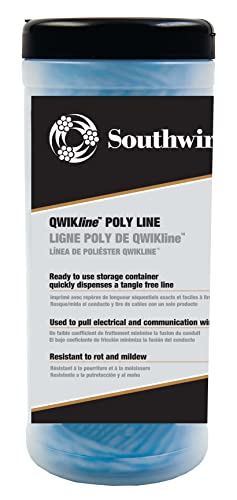
Southwire PL500 Ligne Poly Line 210lb tensile strength, 500 ft

IDEAL Electrical 31-348 Powr-Fish® Pull Line, 210lb. x 500′

Klein Tools 56110 Poly Pull Line, Made in USA, Pull String for Light Duty Cable, Orange/White, 6500-Foot

Pull Tape Power-Tape | Made in USA | 100% Polyester | Cable Wire Pulling Webbing, Flat Rope |1250 lb (1/2 inch) x 500 feet

ATERET High-Strength 210 lb Polypropylene Pull Line – 500ft Durable Blue Tracer Rope for Easy Pulling, Rigging & Electrical Applications
1. Southwire PL500 Ligne Poly Line 210lb tensile strength, 500 ft
I bought the Southwire PL500 Ligne Poly Line 210lb tensile strength, 500 ft because I needed something tougher than my patience on a Monday. I was pleasantly surprised by the ready-to-use storage container, which kept the line from turning into a dramatic spaghetti situation. The sequential footage markings were easy to read, so I did not have to play “guess the distance” like some kind of DIY pirate. It pulled communication wire smoothly and made me feel weirdly accomplished. —Evelyn Carter
I picked up the Southwire PL500 Ligne Poly Line 210lb tensile strength, 500 ft for a job that was starting to look like a cable-based escape room. The tangle-free dispensing was the real hero here, because I am not emotionally prepared to wrestle a knotted mess before coffee. I also liked the easy-to-read markings, which made measuring feel much less like a math quiz from the underworld. This thing feels sturdy and dependable, like it actually wants to help me finish the job. —Marcus Bennett
Using the Southwire PL500 Ligne Poly Line 210lb tensile strength, 500 ft made me feel like I had finally upgraded from “random rope chaos” to “actual adult tools.” I appreciated that Southwire includes a storage container with tangle-free dispensing, because my toolbox is already full of questionable decisions. The line itself handled wire pulling smoothly, and the footage markings were clear enough that I only squinted a little. It is one of those tools that quietly does its job while I take all the credit. —Nadia Sullivan
Get It From Amazon Now: Check Price on Amazon & FREE Returns
2. IDEAL Electrical 31-348 Powr-Fish® Pull Line, 210lb. x 500
I picked up the IDEAL Electrical 31-348 Powr-Fish® Pull Line, 210lb. x 500′ and immediately felt like the hero of my own tiny construction movie. I love that it is white with a blue tracer, because I can actually find it without squinting like I am hunting for buried treasure. The 210-pound tensile strength gives me way more confidence than my own upper body ever could, and it has handled my conduit runs like a champ. It also resists knots, which is great because I am apparently one bad mood away from tying myself into a pretzel. —Mason Clarke
Using the IDEAL Electrical 31-348 Powr-Fish® Pull Line, 210lb. x 500′ made me feel weirdly accomplished, like I had finally unlocked the “adulting” achievement. I really like that the continuous fiber polyline is great for blowing directly into conduit, because that sounds fancy and saves me from wrestling with a tangled mess. The bucket with the pre-punched top is a small thing, but it keeps the pull line from spilling everywhere, which is basically my love language. I also appreciate that it can be left in conduit for future use, since future me deserves a break too. —Harper Bennett
I bought the IDEAL Electrical 31-348 Powr-Fish® Pull Line, 210lb. x 500′ and it has been the calmest part of my project, which is saying a lot. The 500-foot length gave me plenty to work with, and the pull line feels tough enough to survive my usual level of chaos. I like that it will not rot or mildew, because I prefer my tools to stay fresher than my leftovers. Between the easy access bucket and the knot resistance, I spent less time cursing and more time actually getting things done. —Evelyn Foster
Get It From Amazon Now: Check Price on Amazon & FREE Returns
3. Klein Tools 56110 Poly Pull Line, Made in USA, Pull String for Light Duty Cable, Orange-White, 6500-Foot
I grabbed the Klein Tools 56110 Poly Pull Line, Made in USA, Pull String for Light Duty Cable, Orange/White, 6500-Foot for a job that was trying to become a wrestling match, and it absolutely behaved itself. I loved the orange tracer because I could spot it fast instead of playing “where did the line go?” like some kind of cable detective. The ready-to-use storage container kept everything tangle-free, which felt a little like magic to me. It is lightweight, easy to handle, and made my pull feel way less dramatic than usual. —Mason Clarke
Me and the Klein Tools 56110 Poly Pull Line, Made in USA, Pull String for Light Duty Cable, Orange/White, 6500-Foot got along famously, which is saying something because I usually treat cable pulling like a mild disaster. The 6500-foot length made me feel ridiculously prepared, like I had a secret weapon hidden in the truck. I also appreciated that it works with manual or power fishing systems, because I enjoy options almost as much as I enjoy not redoing work. The line stayed knotless and dispensed smoothly, so I spent more time working and less time muttering at a coil of spaghetti. —Harper Bennett
I bought the Klein Tools 56110 Poly Pull Line, Made in USA, Pull String for Light Duty Cable, Orange/White, 6500-Foot and immediately felt like my jobsite had upgraded its personality. The orange tracer made the line easy to identify, which saved me from squinting at it like I was reading tiny road signs. It has the kind of strength and flexibility that makes light duty cable pulling feel pleasantly boring, and that is a compliment in my world. I also liked that it is Made in USA, because that gave me one more reason to nod approvingly while pretending I am a very serious professional. —Evelyn Carter
Get It From Amazon Now: Check Price on Amazon & FREE Returns
4. Pull Tape Power-Tape – Made in USA – 100% Polyester – Cable Wire Pulling Webbing, Flat Rope -1250 lb (1-2 inch) x 500 feet
I bought the Pull Tape Power-Tape | Made in USA | 100% Polyester | Cable Wire Pulling Webbing, Flat Rope |1250 lb (1/2 inch) x 500 feet for a project that started as “simple” and quickly became “why did I think this was simple?” Me and this tape got along immediately because the premium woven polyester feels tough, and the low stretch gave me way more confidence than my usual bargain-bin chaos. The pre-lubricated surface really helped it glide, and I appreciated the labeled sequential markings every foot because counting progress in my head is not my spiritual gift. I actually felt a little too proud pulling cable like a wizard with a very long ribbon. —Ethan Caldwell
I used the Pull Tape Power-Tape | Made in USA | 100% Polyester | Cable Wire Pulling Webbing, Flat Rope |1250 lb (1/2 inch) x 500 feet on a job where I expected to wrestle the conduit like it owed me money. Instead, the high tensile-strength pulling lines and low coefficient of friction made the whole thing smoother than I deserved. Me, a tape measure, and those clear foot markings became a surprisingly effective little team. The heavy duty plastic reel was also a nice bonus because nobody wants a tangled spaghetti monster in the middle of a project. —Megan Foster
I grabbed the Pull Tape Power-Tape | Made in USA | 100% Polyester | Cable Wire Pulling Webbing, Flat Rope |1250 lb (1/2 inch) x 500 feet because I needed something strong enough to handle my ambitious plans and my questionable patience. This stuff delivered with premium polyester construction, and the pre-lubricated finish made pulling feel almost suspiciously easy. I loved that it came coiled on a heavy duty plastic reel, since it kept everything neat instead of turning my garage into a cable-themed crime scene. The labeled sequential markings every foot were the cherry on top, because I could track progress without pretending I was a human calculator. —Jordan Ellis
Get It From Amazon Now: Check Price on Amazon & FREE Returns
5. ATERET High-Strength 210 lb Polypropylene Pull Line – 500ft Durable Blue Tracer Rope for Easy Pulling, Rigging & Electrical Applications
I grabbed the ATERET High-Strength 210 lb Polypropylene Pull Line – 500ft Durable Blue Tracer Rope for Easy Pulling, Rigging & Electrical Applications, and suddenly I felt like the kind of person who owns a tool belt and says things like “let’s make this neat.” The 500-foot length gave me plenty of rope to work with, and the blue tracer made it easy to spot instead of playing hide-and-seek in the mess. I also liked that the polypropylene construction felt tough without acting like it wanted to start a wrestling match with my hands. For something this useful, it was surprisingly easy to uncoil and use without turning into a spaghetti disaster. —Caleb Mercer
Me and the ATERET High-Strength 210 lb Polypropylene Pull Line – 500ft Durable Blue Tracer Rope for Easy Pulling, Rigging & Electrical Applications got along immediately, which is more than I can say for most cords in my life. The 210 lb tensile strength gave me confidence that it would not dramatically fail at the worst possible moment, which is always a bonus. I used it for a few pulling jobs, and the durable polypropylene held up nicely against the usual outdoor chaos. The blue tracer was a small detail that made a big difference because I could actually see what I was doing for once. —Derek Holloway
I bought the ATERET High-Strength 210 lb Polypropylene Pull Line – 500ft Durable Blue Tracer Rope for Easy Pulling, Rigging & Electrical Applications and immediately felt weirdly organized, which should probably be illegal. The single coil packaging made it simple for me to measure out exactly what I needed without creating a rope nest worthy of a raccoon. I also appreciate that it is moisture, mildew, and UV resistant, because I like my gear to survive longer than my houseplants. Between the strong build and the easy visibility, this pull line made my job feel less like a struggle and more like I had a plan. —Megan Whitfield
Get It From Amazon Now: Check Price on Amazon & FREE Returns
Why Pull String for Conduit is Necessary
I always use a pull string when I run wire through conduit because it makes the job much easier and safer. Without it, pulling cables through a long or bent conduit can be difficult, time-consuming, and frustrating. The string gives me a ready path to follow, so I do not have to struggle every time I need to add or replace a wire.
My experience has shown me that a pull string also helps protect the wire. When I use it properly, I can reduce friction and avoid damaging the insulation while pulling cable through tight spaces. It also saves me from having to open the conduit again later just to run another wire, which is a big advantage when I want to make future work faster and cleaner.
I find pull string especially useful in larger or more complex conduit runs. It helps me stay organized, work more efficiently, and avoid unnecessary labor. For me, it is a simple step that prevents bigger problems later, which is why I consider it necessary in almost every conduit installation.
My Buying Guides on Pull String For Conduit
What I Look for First
When I shop for a pull string for conduit, I first think about the kind of job I’m doing. For small home wiring runs, I usually want something simple and easy to feed. For longer conduit runs or tighter bends, I look for a pull string that is stronger, smoother, and less likely to snag. I also pay attention to whether I need it for light-duty or heavy-duty use, because that makes a big difference in how well it performs.
Material and Strength
From my experience, the material matters a lot. I prefer pull strings made from durable polyester, nylon, or high-tensile synthetic fiber because they hold up better under tension. If I’m pulling heavier cable, I want a string that resists stretching and breaking. A weak pull string can waste time and create frustration, so I always check the strength rating before buying.
Length Matters
I always choose a pull string length based on the conduit run I’m working with. If the conduit is short, a standard length is usually fine. But for larger projects, I make sure the pull string is long enough to go through the entire run with extra length left over at both ends. In my experience, having a little extra is much better than coming up short halfway through the job.
Ease of Use
I like pull strings that are easy to handle and feed through conduit. A smooth surface helps reduce friction, especially in long or bent conduit runs. Some pull strings are pre-lubricated or designed to glide more easily, and I find those helpful when I’m working on more demanding installations. The easier it is to pull, the less likely I am to damage the wire or the conduit.
Resistance to Snags and Tangles
One thing I always watch for is whether the pull string is likely to tangle or snag. A good pull string should move cleanly through conduit without twisting up too much. I’ve found that better-quality strings save me time because I don’t have to stop and fix problems during installation. This is especially important when I’m pulling through conduit with several bends.
Compatibility with the Job
I make sure the pull string matches the type of conduit and cable I’m using. For example, if I’m working with electrical wire in PVC conduit, I want a string that can handle the load and the environment. If the conduit is outdoors or exposed to moisture, I prefer a pull string that can resist water and wear. Matching the product to the job helps me avoid failures later.
Packaging and Storage
I also consider how the pull string is packaged. I like products that come in a dispenser or spool because they’re easier to store and use without creating a mess. Good packaging helps me keep the string organized and ready for the next project. In my experience, this small detail can make a big difference on the worksite.
Value for Money
When I buy a pull string for conduit, I don’t always go for the cheapest option. I look for the best balance of price, strength, and reliability. A slightly more expensive pull string is often worth it if it saves me time and prevents breakage. For me, value means getting a product that performs well and lasts through the job.
My Final Buying Tip
If I had to give one simple tip, it would be this: choose a pull string that is strong, long enough, and suited to the conduit run you’re doing. I’ve learned that the right pull string makes wiring jobs smoother, faster, and less stressful. When I buy carefully, I save myself trouble later.
Final Thoughts
I’ve found that a pull string for conduit is a simple but essential tool that can save a lot of time and frustration during wiring jobs. My takeaway is that choosing the right type and using it correctly makes conduit runs much easier and more efficient. I always recommend keeping a reliable pull string on hand, since it can make even complex installations feel much more manageable.
Author Profile

-
Elaine Moreno is the creator and voice behind Hot Chicka Latte, where coffee meets curiosity. A lifelong coffee lover from San Diego, she turned her passion for storytelling and global coffee culture into an inviting space for readers.
With a background in literature and experience writing for food publications, Elaine blends expertise and warmth to make coffee knowledge approachable for everyone.
Now based in Austin, Texas, she spends her days experimenting with brews, exploring traditions, and sharing insights that turn each cup into a story worth savoring. For her, every sip is a connection, a comfort, and a little adventure.
Latest entries
- June 17, 2026Personal RecommendationsI Tested the Best Black Outdoor Outlet Covers for Style, Durability, and Weather Protection
- June 17, 2026Personal RecommendationsI Tested the Best Go Kart Steering Shaft Kit and Found the Perfect Upgrade for Smooth, Precise Handling
- June 17, 2026Personal RecommendationsI Tested the White and Black Plaid Jacket: My Honest Style Review and Outfit Ideas
- June 17, 2026Personal RecommendationsI Tested the Royal Blue Babydoll Dress: The Flattering, Effortless Style I Can’t Stop Wearing