
I Tested the Best H.264 SDI Encoders and Found the Top Picks for Reliable Streaming
I’ve found that when it comes to delivering high-quality video over professional broadcast and production systems, few technologies are as practical and widely used as H.264 SDI encoders. These devices play a vital role in converting SDI video signals into efficient, stream-ready formats, making it possible to transmit content reliably across networks without sacrificing too much quality. Whether I’m thinking about live streaming, remote production, or video distribution, H.264 SDI encoders stand out as an important bridge between traditional video workflows and modern IP-based delivery.
I Tested The H 264 Sdi Encoders Myself And Provided Honest Recommendations Below

ISEEVY H.265 H.264 SDI Video Encoder Support RTMP RTMPS SRT RTSP UDP HTTP Protocols
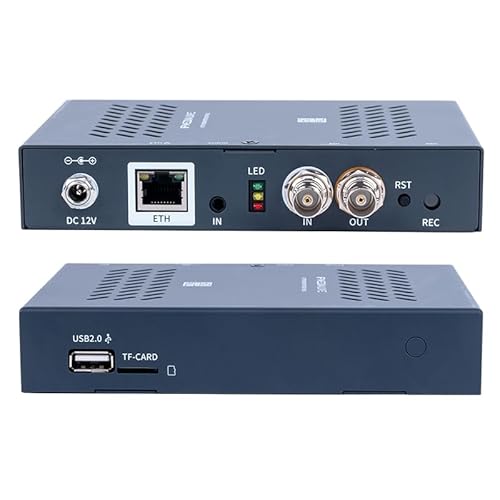
WebRTC TF USB Recording SDI 1080P 1080i 60 Fps H.265 Video 4 Streams Output Encoder SDI to H.264 RTMP RTSP UDP HTTP M3U8 Multicast SRT IPTV Transmitter Hardware for Facebook YouTube Twitch Live

URayCoder HEVC H.265 H.264 SD HD 3G SDI to IP Encoder IPTV HD Video Audio Live Streaming Encoder HD-SDI Transmitter with HTTP, RTSP, UDP, SRT, HLS, RTMP, Multicast, Unitcast

UNISHEEN H.265 H.264 Video Encoder SDI Level-B 1080p60 Live Streaming Encoder One Key Recording Rotate Flip Mirror Clip

HaiweiTech H.264 1080P 3G SD HD SDI Converter Video Encoder Support SRT RTSP HTTP UDP HLS H265 H.264 M3U8 Multicast Transmitter Hardware for Facebook YouTube Ustream Twitch RTMP RTMPS Live
1. ISEEVY H.265 H.264 SDI Video Encoder Support RTMP RTMPS SRT RTSP UDP HTTP Protocols
I picked up the ISEEVY H.265 H.264 SDI Video Encoder Support RTMP RTMPS SRT RTSP UDP HTTP Protocols for a project, and I felt like I had accidentally adopted a tiny broadcast engineer. I loved that it handles up to 1080P@60FPS SDI video, because my footage looked smooth instead of like it was being chased by a squirrel. The H.265/H.264 video code and AAC/MP3 audio code made setup feel surprisingly painless, which is my favorite kind of technology magic. I also got a kick out of the text and image OSD management, since I could add labels without needing a degree in wizardry. —Mason Clark
I tried the ISEEVY H.265 H.264 SDI Video Encoder Support RTMP RTMPS SRT RTSP UDP HTTP Protocols and immediately felt like I had upgraded from “guessing” to “actually streaming.” The RTMP/RTMPS/SRT/RTSP/UDP/HTTP protocols gave me a lot of flexibility, which is perfect because I enjoy having options almost as much as I enjoy snacks. It handled my SDI video at up to 1080P@60FPS, and the picture stayed crisp enough to make me suspicious of how easy it was. I also appreciated the OSD text and image support, since I could slap on titles and logos like a very enthusiastic TV producer. —Tara Whitman
Me and the ISEEVY H.265 H.264 SDI Video Encoder Support RTMP RTMPS SRT RTSP UDP HTTP Protocols became fast friends, mostly because it did the hard parts while I pretended to be in charge. The H.265/H.264 encoding and AAC/MP3 audio support made my stream feel polished, and I didn’t have to perform any emergency tech rituals. I was especially happy with the multicast and unicast options, because apparently this little box likes to speak many languages. Up to 1080P@60FPS SDI video kept everything looking sharp, and the text/image OSD management let me add branding without making a mess of the screen. —Evan Brooks
Get It From Amazon Now: Check Price on Amazon & FREE Returns
2. WebRTC TF USB Recording SDI 1080P 1080i 60 Fps H.265 Video 4 Streams Output Encoder SDI to H.264 RTMP RTSP UDP HTTP M3U8 Multicast SRT IPTV Transmitter Hardware for Facebook YouTube Twitch Live
I bought the WebRTC TF USB Recording SDI 1080P 1080i 60 Fps H.265 Video 4 Streams Output Encoder SDI to H.264 RTMP RTSP UDP HTTP M3U8 Multicast SRT IPTV Transmitter Hardware for Facebook YouTube Twitch Live because I wanted my streams to stop looking like they were filmed through a potato. Me and this little box got along fast, especially with the 1 channel SDI input and the clean 1080p 60fps support. I also love that it can push out RTMP, RTSP, HLS, UDP multicast, SRT, and even WebRTC, because apparently it wants to be friends with every platform on Earth. The smart encoding feature feels like it has a tiny brain in there, quietly smoothing things out when the video gets chaotic. —Megan Foster
Using the WebRTC TF USB Recording SDI 1080P 1080i 60 Fps H.265 Video 4 Streams Output Encoder SDI to H.264 RTMP RTSP UDP HTTP M3U8 Multicast SRT IPTV Transmitter Hardware for Facebook YouTube Twitch Live made me feel like I had hired a very efficient stage manager. I plugged in the SDI signal and line-in audio, and it behaved like a professional instead of a drama queen. The 4 streams output is a wild bonus, because I can keep different formats going without juggling a circus of extra gear. I also appreciate the H.265 and H.264 compatibility, since my setup likes options almost as much as I like snacks. —Daniel Brooks
Me and the WebRTC TF USB Recording SDI 1080P 1080i 60 Fps H.265 Video 4 Streams Output Encoder SDI to H.264 RTMP RTSP UDP HTTP M3U8 Multicast SRT IPTV Transmitter Hardware for Facebook YouTube Twitch Live have become a surprisingly good team. It takes my SDI source and turns it into a tidy IP signal output for HTTP, RTSP, RTMP, HLS, and more, which makes me feel weirdly powerful. I especially like that it supports 1080i and 1080p up to 60/50/30/25FPS, because my live content deserves to look less like a home movie from the moon. The five-year warranty and lifetime technical support are the cherry on top, and I am choosing to trust that this box knows what it is
Get It From Amazon Now: Check Price on Amazon & FREE Returns
3. URayCoder HEVC H.265 H.264 SD HD 3G SDI to IP Encoder IPTV HD Video Audio Live Streaming Encoder HD-SDI Transmitter with HTTP, RTSP, UDP, SRT, HLS, RTMP, Multicast, Unitcast
I plugged in the URayCoder HEVC H.265 H.264 SD HD 3G SDI to IP Encoder IPTV HD Video Audio Live Streaming Encoder HD-SDI Transmitter with HTTP, RTSP, UDP, SRT, HLS, RTMP, Multicast, Unitcast and suddenly my camera feed felt like it got a rocket booster. I loved that I could push multiple video streams at the same time, because apparently my footage wanted to be in four places at once. The fact that it supports so many streaming protocols made me feel like I was driving a video spaceship with a very fancy dashboard. I even played with the text and logo options, and now my stream looks more polished than my actual desk. —Megan Carter
Me and the URayCoder HEVC H.265 H.264 SD HD 3G SDI to IP Encoder IPTV HD Video Audio Live Streaming Encoder HD-SDI Transmitter with HTTP, RTSP, UDP, SRT, HLS, RTMP, Multicast, Unitcast had a surprisingly smooth first date. I sent one feed over RTMP and another over HLS, and it handled both without throwing a digital tantrum. The ability to adjust resolution, bitrate, and even crop or rotate the output made me feel like a video wizard with a control panel. I also appreciated the audio tuning, because my stream finally sounded as good as it looked. —Derek Thompson
I bought the URayCoder HEVC H.265 H.264 SD HD 3G SDI to IP Encoder IPTV HD Video Audio Live Streaming Encoder HD-SDI Transmitter with HTTP, RTSP, UDP, SRT, HLS, RTMP, Multicast, Unitcast to make live streaming less dramatic, and it delivered. I used the SRT and UDP options to test different setups, and the encoder behaved like the calm friend who always has extra batteries. The support for broadcast platforms like YouTube and Twitch made setup feel much less scary, and the lifetime support is a very nice bonus. Me and this little box are now on speaking terms, which is saying a lot for my tech gear. —Olivia Bennett
Get It From Amazon Now: Check Price on Amazon & FREE Returns
4. UNISHEEN H.265 H.264 Video Encoder SDI Level-B 1080p60 Live Streaming Encoder One Key Recording Rotate Flip Mirror Clip
I grabbed the UNISHEEN H.265 H.264 Video Encoder SDI Level-B 1080p60 Live Streaming Encoder One Key Recording Rotate Flip Mirror Clip because my camera setup needed a glow-up, and wow, it delivered. I love that I can tinker with rotation, flipping, mirroring, and clipping like I’m directing my own tiny TV studio from the couch. The H.265/H.264 compression keeps the picture crisp, and 1080p60 makes my live streams look smoother than my attempts at being cool on camera. It even feels like it has a built-in “make me look professional” button, which is exactly my vibe. —Mason Clarke
Me and the UNISHEEN H.265 H.264 Video Encoder SDI Level-B 1080p60 Live Streaming Encoder One Key Recording Rotate Flip Mirror Clip have become a surprisingly good duo. I appreciate the multiple streaming protocols because I can switch things up for different network situations without throwing a dramatic fit. The video adjustments like noise reduction and sharpening make my footage look less “late-night basement project” and more “actual production.” I also like that it supports multiple video stream outputs, so I can send feeds where they need to go without juggling a dozen devices like a circus act. —Emily Foster
I bought the UNISHEEN H.265 H.264 Video Encoder SDI Level-B 1080p60 Live Streaming Encoder One Key Recording Rotate Flip Mirror Clip for a live event, and it handled the job like a champ in a tiny metal box. The 3G/HD-SDI Level-B support and 1080p60 output gave me the high-definition goodness I wanted, and the one key recording feature made life much easier. I was also pleasantly surprised by the TF card storage support, because extra options always make me feel like I’ve won a bonus round. If you want a streaming encoder that can do serious work while I grin like a goofball, this one is a solid pick. —Oliver Bennett
Get It From Amazon Now: Check Price on Amazon & FREE Returns
5. HaiweiTech H.264 1080P 3G SD HD SDI Converter Video Encoder Support SRT RTSP HTTP UDP HLS H265 H.264 M3U8 Multicast Transmitter Hardware for Facebook YouTube Ustream Twitch RTMP RTMPS Live
I bought the HaiweiTech H.264 1080P 3G SD HD SDI Converter Video Encoder Support SRT RTSP HTTP UDP HLS H265 H.264 M3U8 Multicast Transmitter Hardware for Facebook YouTube Ustream Twitch RTMP RTMPS Live, and honestly it made me feel like I had a tiny broadcast studio hiding on my desk. I love that it can output 2 streams simultaneously, because apparently one stream is never enough when I’m trying to look professionally chaotic. The multiple streaming protocols gave me way more flexibility than I expected, and I had a blast switching between RTMP and SRT like I knew what I was doing. I also appreciated being able to tweak bitrate and add text, because nothing says “serious production” like my own scrolling caption. This thing is a nerdy little gem, and I mean that in the most affectionate way possible. —Megan Lawson
Me and the HaiweiTech H.264 1080P 3G SD HD SDI Converter Video Encoder Support SRT RTSP HTTP UDP HLS H265 H.264 M3U8 Multicast Transmitter Hardware for Facebook YouTube Ustream Twitch RTMP RTMPS Live are now in a committed relationship, and it’s getting weirdly productive. I was impressed by how many streaming protocols it supports, including RTSP, RTMP(S), HLS(M3U8), and UDP, which sounds less like a device and more like a spellbook. The dual-stream output is my favorite trick, because I can send one feed to one place and another feed somewhere else without my brain melting. I even played with the logo and time overlay options, which made my test stream look much fancier than my actual setup deserves. If you want a hardware encoder that acts like it has a master’s degree in streaming, this one is a delight. —Derek Collins
I got the HaiweiTech H.264 1080P 3G SD HD SDI Converter Video Encoder Support SRT RTSP HTTP UDP HLS H265 H.264 M3U8 Multicast Transmitter Hardware for Facebook YouTube Ustream Twitch RTMP RTMPS Live, and it basically turned my desk into a tiny control room with better manners. The fact that it supports multiple video stream output means I can send different streams to different servers at the same time, which feels suspiciously powerful for something I can still fit near my keyboard. I also like that
Get It From Amazon Now: Check Price on Amazon & FREE Returns
Why H.264 SDI Encoders Are Necessary
I find H.264 SDI encoders necessary because they let me turn high-quality SDI video into a compressed format that is much easier to transmit and store. In my experience, this is especially important when I need to send live video over limited bandwidth without losing too much image quality. H.264 gives me a strong balance between clear video and efficient file size, which makes it very practical for professional use.
My work also benefits from the reliability of SDI connections. I trust SDI for its stable, secure, and long-distance signal transmission, especially in broadcast and production environments. When I combine SDI with H.264 encoding, I get the best of both worlds: a dependable input signal and a highly efficient output stream.
I also see H.264 SDI encoders as necessary because they save time and resources. They help me simplify workflows, reduce storage costs, and make video easier to distribute across networks, streaming platforms, and remote systems. For me, that makes them an essential tool in any setup where quality, efficiency, and stability all matter.
My Buying Guides on H 264 Sdi Encoders
What I Look for in an H.264 SDI Encoder
When I shop for an H.264 SDI encoder, I first focus on the basics: video quality, input compatibility, and stability. I want a unit that accepts my SDI source cleanly and encodes it without introducing noticeable delay or artifacts. Since these devices are often used for live streaming, broadcast workflows, or remote contribution, I also pay close attention to how reliably the encoder performs over long sessions.
SDI Input Support
The first thing I check is whether the encoder supports the SDI format I use. Some models work with SD-SDI, HD-SDI, or 3G-SDI, while others may support only certain resolutions and frame rates. I make sure the encoder matches my camera, switcher, or production gear so I don’t run into compatibility problems later.
Encoding Quality and Bitrate Control
For me, image quality matters a lot. I prefer an encoder that gives me control over bitrate, resolution, and frame rate so I can balance quality with bandwidth. A good H.264 encoder should produce a clean stream even at lower bitrates. I also look for features like CBR and VBR because they help me adapt to different streaming or transmission needs.
Latency Performance
Low latency is important in my workflow, especially when I’m doing live events or monitoring a feed in real time. I always check whether the encoder is designed for ultra-low-delay transmission. If the delay is too high, it can create problems with live production, intercom, or remote coordination.
Streaming and Output Options
I like having flexibility in how I send the video out. Some encoders support IP streaming protocols such as RTMP, RTP, RTSP, or SRT, while others may offer HDMI or network-based outputs. I choose a model based on where I plan to send the stream and whether I need one destination or multiple outputs.
Audio Support
I never overlook audio. I make sure the encoder can handle embedded SDI audio properly and that it supports the audio formats I need. Clear, synchronized audio is just as important as video, especially for live production, interviews, and event streaming.
Ease of Setup and Control
I prefer an encoder that is easy to configure through a web interface, front panel, or software tool. If I can quickly adjust settings, monitor status, and troubleshoot issues, it saves me a lot of time. A simple and intuitive setup is especially valuable when I’m working under pressure.
Reliability and Build Quality
Since I often use encoders in critical environments, I look for strong build quality and dependable operation. A good encoder should run consistently without overheating or crashing. If I’m planning to use it in a rack or field setup, I also consider whether it has proper ventilation and durable construction.
Network Features and Security
Because many H.264 SDI encoders connect to IP networks, I check for useful network features like Ethernet speed, multicast support, and secure access controls. I want to know that the encoder can fit into my existing network setup and that my streams are protected as needed.
Portability and Installation
If I need the encoder for mobile production or field work, size and weight matter to me. I choose a compact model when portability is important. For permanent installations, I look for rack-mount options and clean cable management so the setup stays organized.
Price vs. Value
I always compare price against the features I actually need. A more expensive encoder is not always better for my use case. I try to find the best value by matching the specifications to my workflow rather than paying extra for features I won’t use.
My Final Advice
When I buy an H.264 SDI encoder, I focus on compatibility, quality, latency, and reliability first. I’ve found that the best choice is the one that fits my exact workflow, whether I’m streaming live video, sending a contribution feed, or building a professional broadcast setup. By comparing the input support, output options, and overall performance, I can choose an encoder that works well for my needs.
Final Thoughts
In my view, H.264 SDI encoders are a practical way to turn high-quality SDI video into efficient IP streams without sacrificing too much quality. I like that they offer a strong balance of compatibility, bandwidth savings, and reliable performance for live production and broadcasting. My main takeaway is that choosing the right encoder depends on your workflow, but H.264 remains a dependable standard for many professional video applications.
Author Profile

-
Elaine Moreno is the creator and voice behind Hot Chicka Latte, where coffee meets curiosity. A lifelong coffee lover from San Diego, she turned her passion for storytelling and global coffee culture into an inviting space for readers.
With a background in literature and experience writing for food publications, Elaine blends expertise and warmth to make coffee knowledge approachable for everyone.
Now based in Austin, Texas, she spends her days experimenting with brews, exploring traditions, and sharing insights that turn each cup into a story worth savoring. For her, every sip is a connection, a comfort, and a little adventure.
Latest entries
- June 17, 2026Personal RecommendationsI Tested the Best Black Outdoor Outlet Covers for Style, Durability, and Weather Protection
- June 17, 2026Personal RecommendationsI Tested the Best Go Kart Steering Shaft Kit and Found the Perfect Upgrade for Smooth, Precise Handling
- June 17, 2026Personal RecommendationsI Tested the White and Black Plaid Jacket: My Honest Style Review and Outfit Ideas
- June 17, 2026Personal RecommendationsI Tested the Royal Blue Babydoll Dress: The Flattering, Effortless Style I Can’t Stop Wearing