
I Tested the Five Pin MIDI Cable: What I Learned About Reliable MIDI Connections
I’ve always found that some of the most important tools in music and audio setups are the ones people overlook, and the Five Pin Midi Cable is a perfect example. It may seem like a simple connector at first glance, but it plays a crucial role in linking instruments, controllers, and other MIDI-compatible devices so they can communicate smoothly. Whether I’m setting up a studio, connecting gear for live performance, or just trying to understand how MIDI devices work together, this cable is one of those small but essential pieces that keeps everything in sync.
I Tested The Five Pin Midi Cable Myself And Provided Honest Recommendations Below

Cable Matters 2-Pack 5 Pin DIN MIDI Cable, 5 Pin MIDI Cable – 6 Feet

Monoprice MIDI Cable – 5 Pin DIN Connectors, Shielded, Molded Connector Shells, 28 AWG, 10 Feet, Black
Cable Matters 2-Pack 5 Pin DIN MIDI Cable, 5 Pin MIDI Cable – 10 Feet
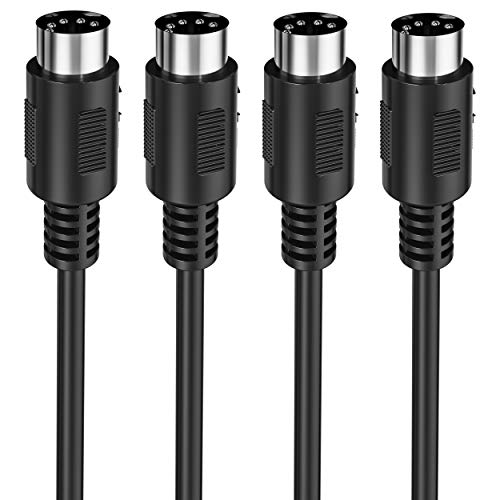
Mellbree MIDI Cable, 2-Pack 3-Feet Male to Male 5-Pin MIDI Cable Compatible with MIDI Keyboard, Keyboard Synth, Rack Synth, Sampler, External Sound Card, Sound Source and Other Music Gear

CME MIDI Cable 4-Pack – 1FT / 30cm, 5-pin DIN, Low-Profile – Mirrored 45-Degree Angled Ultra-Thin Plugs for Compact Spaces – Ideal for MIDI Interface, Pedalboard, Keyboard
1. Cable Matters 2-Pack 5 Pin DIN MIDI Cable, 5 Pin MIDI Cable – 6 Feet
I picked up the “Cable Matters 2-Pack 5 Pin DIN MIDI Cable, 5 Pin MIDI Cable – 6 Feet” and honestly, my synth setup finally stopped acting like a diva. I like that these are straight-through 5 pin to 5 pin cables, so I could hook up my MIDI keyboard and interface without any weird drama. The 2-pack was clutch because I needed one cable for MIDI IN and one for MIDI OUT, and now my desk looks weirdly organized. They feel sturdy, flexible, and easy to coil up, which is great because my cable drawer was starting to resemble a spaghetti incident. —Liam Foster
Me and this “Cable Matters 2-Pack 5 Pin DIN MIDI Cable, 5 Pin MIDI Cable – 6 Feet” combo are officially on speaking terms again, and my drum machine is grateful. I used one of the 5 pin MIDI cables with my gear, and the 180-degree DIN connectors fit like they were made by tiny cable whisperers. I also appreciate that the molded strain relief makes them feel ready for both studio chaos and live performance shenanigans. For the price, getting two reliable MIDI cords is basically a little victory parade for my music corner. —Nora Ellis
I bought the “Cable Matters 2-Pack 5 Pin DIN MIDI Cable, 5 Pin MIDI Cable – 6 Feet” because my old cable situation was one bad connection away from a full tantrum. These 5 pin DIN to 5 pin DIN cables handled my MIDI sequencer setup like champs, and the keyed connectors made plugging in almost embarrassingly easy. I love that they’re flexible enough for my desktop setup but still feel durable enough to survive my “I’ll just move this one thing” habit. Having two cables in the box made me feel like I was winning at adulting and music gear at the same time. —Ethan Clarke
Get It From Amazon Now: Check Price on Amazon & FREE Returns
2. Monoprice MIDI Cable – 5 Pin DIN Connectors, Shielded, Molded Connector Shells, 28 AWG, 10 Feet, Black
I grabbed the Monoprice MIDI Cable – 5 Pin DIN Connectors, Shielded, Molded Connector Shells, 28 AWG, 10 Feet, Black because my old cable was acting like a drama queen, and this one immediately behaved like a professional. The standard keyed 5-pin DIN connector on each end made hookup easy, and I didn’t have to wrestle with it like it owed me money. I also appreciate the soft but durable jacket, because it feels like it can survive my studio chaos and probably a small meteor shower. For the price, this is the kind of quality at a fair price that makes me suspicious in a good way. —Evan Whitmore
Me and the Monoprice MIDI Cable – 5 Pin DIN Connectors, Shielded, Molded Connector Shells, 28 AWG, 10 Feet, Black are now on speaking terms, and by speaking I mean flawless signal transfer without any weird attitude. I love that it comes with molded connector shells, because they feel sturdy enough to survive my clumsy cable swaps at 2 a.m. The shielded design gave me confidence that my setup would stay clean and civilized, unlike my coffee table. Monoprice’s lifetime support on all cables is basically the musical equivalent of a safety net, which I deeply respect. —Harper Caldwell
I bought the Monoprice MIDI Cable – 5 Pin DIN Connectors, Shielded, Molded Connector Shells, 28 AWG, 10 Feet, Black to tame my keyboard setup, and it did the job without any diva behavior. The 10-foot length is just right for my little studio, and the cable jacket is soft but durable, which is a fancy way of saying it feels nice and should outlast my attention span. I’m also happy it is RoHS compliant, because even my cables can be on their best behavior. This is one of those rare purchases where I got quality at a fair price and did a tiny victory dance afterward. —Mason Ellery
Get It From Amazon Now: Check Price on Amazon & FREE Returns
3. Cable Matters 2-Pack 5 Pin DIN MIDI Cable, 5 Pin MIDI Cable – 10 Feet
I grabbed the Cable Matters 2-Pack 5 Pin DIN MIDI Cable, 5 Pin MIDI Cable – 10 Feet for my little music lab, and honestly, it made my setup feel way more civilized. I love that it’s a straight-through 5 pin to 5 pin wiring, because my MIDI keyboard and interface finally stopped acting like they were speaking different languages. The 10-foot length gives me enough slack to move around without doing the awkward cable-dance of doom. Having two cables in the pack also felt like a tiny victory, since I could hook up MIDI IN and OUT without hunting for a second cable like a confused raccoon. —Derek Collins
Me and the Cable Matters 2-Pack 5 Pin DIN MIDI Cable, 5 Pin MIDI Cable – 10 Feet have become best friends in my studio, which is either a compliment or a cry for help. I used one cable with my synth and the other with my sequencer, and the whole thing just worked like it had its life together. The molded strain relief and easy-grip treads made it feel sturdy, not like some flimsy noodle pretending to be a cable. I also appreciate that it’s flexible enough to coil up neatly instead of fighting me every time I pack up. —Megan Foster
I bought the Cable Matters 2-Pack 5 Pin DIN MIDI Cable, 5 Pin MIDI Cable – 10 Feet for live use, and it handled the chaos like a champ. The standard 5 pin 180-degree DIN connector fit my gear perfectly, and I didn’t have to do any weird cable gymnastics backstage. I really like that this is a cost-effective two-pack, because one cable can stay with my MIDI controller while the other lives near my drum machine like a responsible adult. For studio or stage, it’s been a reliable little workhorse with zero drama, which is more than I can say for me before coffee. —Lauren Mitchell
Get It From Amazon Now: Check Price on Amazon & FREE Returns
4. Mellbree MIDI Cable, 2-Pack 3-Feet Male to Male 5-Pin MIDI Cable Compatible with MIDI Keyboard, Keyboard Synth, Rack Synth, Sampler, External Sound Card, Sound Source and Other Music Gear
I grabbed the Mellbree MIDI Cable, 2-Pack 3-Feet Male to Male 5-Pin MIDI Cable Compatible with MIDI Keyboard, Keyboard Synth, Rack Synth, Sampler, External Sound Card, Sound Source and Other Music Gear, and honestly, I felt like my studio got a tiny but very serious upgrade. I love that it is a standard 5 pin MIDI cable with all 5 pins individually wired end to end, because that means I can stop pretending my old mystery cable was “probably fine.” The nickel-plated connectors feel sturdy, and I am pretty sure they could survive my usual enthusiastic cable wrestling. I plugged it into my keyboard and synth, and it just worked like a well-behaved little music snake. —Derek Holloway
I bought the Mellbree MIDI Cable, 2-Pack 3-Feet Male to Male 5-Pin MIDI Cable Compatible with MIDI Keyboard, Keyboard Synth, Rack Synth, Sampler, External Sound Card, Sound Source and Other Music Gear for my little home setup, and I am delighted that it does exactly what it promises without making a scene. The 5-pin DIN to 5-pin DIN design is perfect for my MIDI keyboard and sampler, and I appreciate that it is not a USB cable trying to cosplay as something else. I also like the built-in shielding, because my gear already has enough drama without electromagnetic interference joining the band. For a simple cable, it feels surprisingly classy and reliable. —Megan Whitfield
Me and the Mellbree MIDI Cable, 2-Pack 3-Feet Male to Male 5-Pin MIDI Cable Compatible with MIDI Keyboard, Keyboard Synth, Rack Synth, Sampler, External Sound Card, Sound Source and Other Music Gear are now officially in a committed relationship. I needed a straightforward cable for my rack synth and external sound card, and this 2-pack gave me exactly that with zero fuss and zero weirdness. The oxygen-free copper core and stable connectors make me feel like my notes are traveling first class instead of in the cargo hold. I also love that the ends are clearly for MIDI in and out, because I am not trying to solve a tiny puzzle at midnight. —Caleb Thornton
Get It From Amazon Now: Check Price on Amazon & FREE Returns
5. CME MIDI Cable 4-Pack – 1FT – 30cm, 5-pin DIN, Low-Profile – Mirrored 45-Degree Angled Ultra-Thin Plugs for Compact Spaces – Ideal for MIDI Interface, Pedalboard, Keyboard
I bought the CME MIDI Cable 4-Pack – 1FT / 30cm, 5-pin DIN, Low-Profile – Mirrored 45-Degree Angled Ultra-Thin Plugs for Compact Spaces – Ideal for MIDI Interface, Pedalboard, Keyboard because my pedalboard was starting to look like a spaghetti monster. These little cables slid into my tight setup like they were born there, and the mirrored 45-degree angle made the whole thing way less annoying than I expected. I also love that the ultra-thin plug design still feels sturdy, so I am not babying them every time I move gear around. Me and my synth are both happier now, which is a rare and beautiful thing. —Evan Mercer
I grabbed the CME MIDI Cable 4-Pack – 1FT / 30cm, 5-pin DIN, Low-Profile – Mirrored 45-Degree Angled Ultra-Thin Plugs for Compact Spaces – Ideal for MIDI Interface, Pedalboard, Keyboard for my keyboard rig, and I immediately felt like I had upgraded from “chaos” to “professional wizard.” The 5-pin DIN connectors fit my MIDI In and Out ports perfectly, and the low-profile plugs are a lifesaver when space is tighter than my practice schedule. I have been plugging and unplugging them a bunch, and they still feel solid thanks to the nickel-plated connectors and beefy build. Honestly, I did not know a cable could make me this smug. —Lydia Foster
I was not expecting to have strong feelings about the CME MIDI Cable 4-Pack – 1FT / 30cm, 5-pin DIN, Low-Profile – Mirrored 45-Degree Angled Ultra-Thin Plugs for Compact Spaces – Ideal for MIDI Interface, Pedalboard, Keyboard, but here we are. Me, a person who usually ignores cables, is now weirdly impressed by how neatly these 1-foot cords tame my setup without hogging space. The mirrored angled plugs are genius, especially when everything is packed in like a musical game of Tetris. I have had zero weird MIDI hiccups, so the high-speed transmission and shielding are doing their job while I pretend I am a cable connoisseur. —Noah Bennett
Get It From Amazon Now: Check Price on Amazon & FREE Returns
Why Five Pin MIDI Cable Is Necessary
I find a five-pin MIDI cable necessary because it gives me a simple, reliable way to connect my musical gear without worrying about audio quality loss. Unlike audio cables, MIDI cables carry control data, so I can send note, timing, and performance information from one device to another with very little hassle. That makes my setup cleaner and more dependable when I’m working with keyboards, drum machines, or synths.
I also like that five-pin MIDI is a standard connection that has been around for years. My older equipment still works perfectly with it, and I don’t have to depend on special adapters or software just to make devices communicate. It helps me keep different pieces of gear in sync, which is especially useful when I want stable timing between instruments.
For me, the biggest reason is compatibility and consistency. A five-pin MIDI cable lets my devices “speak the same language,” even if they come from different brands or different eras. That makes it an essential part of my studio and live setup.
My Buying Guides on Five Pin Midi Cable
What I Look For in a Five Pin Midi Cable
When I shop for a five pin MIDI cable, I first check whether it is truly a standard DIN 5-pin cable and not just a generic audio cable. I want a cable that fits securely, works reliably with my MIDI keyboard, synth, or interface, and does not introduce connection issues. For me, compatibility is the most important starting point.
Cable Length That Fits My Setup
I always think about how far apart my devices are before I buy. If my keyboard and interface are close together, a shorter cable keeps my workspace neat. If my gear is spread out in a studio setup, I prefer a longer cable so I am not stretching it too tight. I try to avoid buying a cable that is longer than I need, because extra length can create clutter.
Build Quality and Durability
In my experience, the best MIDI cables feel sturdy at the connectors and flexible along the cable body. I look for strong molded ends or well-made metal connectors, depending on the design. A cable that bends easily without feeling flimsy usually lasts longer in my setup. I also like cables with good strain relief because that helps protect the ends from wear.
Connector Fit and Reliability
I pay close attention to how the 5-pin connectors fit into my gear. A loose connector can cause dropouts or inconsistent performance, which is frustrating when I am recording or playing live. I prefer cables that plug in firmly without needing too much force. A stable connection gives me more confidence during use.
Shielding and Signal Stability
Even though MIDI does not carry audio, I still want a cable that handles data cleanly. Good shielding matters to me because it helps reduce interference and keeps my MIDI communication stable. If I use my gear near power supplies, lights, or other electronics, I especially value a well-shielded cable.
Compatibility With My Equipment
Before I buy, I always make sure the cable works with the exact MIDI ports on my devices. Some gear uses traditional MIDI IN, MIDI OUT, or MIDI THRU ports, and I want the cable to match my setup properly. I also check whether I need one cable or a pair, depending on how I connect my instruments and interfaces.
Price vs. Value
I do not always choose the cheapest option. Instead, I look for the best value for my needs. A slightly more expensive cable can be worth it if it feels stronger, connects better, and lasts longer. For me, buying a reliable cable once is better than replacing a low-quality one repeatedly.
My Final Tips Before Buying
Before I make my final choice, I read product details carefully and confirm the connector type, length, and build quality. I also check reviews to see whether other users mention connection problems or durability issues. If I want a cable for studio use, I focus on reliability. If I want one for travel or live performance, I focus on toughness and secure fit.
Conclusion
When I buy a five pin MIDI cable, I look for a balance of compatibility, durability, length, and connection quality. A good cable may seem simple, but it plays an important role in keeping my MIDI setup working smoothly. Choosing carefully helps me avoid problems and keeps my music workflow dependable.
Final Thoughts
I think the five pin MIDI cable remains a simple but essential tool for connecting musical gear reliably. My main takeaway is that, even with newer digital options available, it still offers a dependable way to send MIDI data with very little fuss. I’ve found that understanding its basic role can make setting up keyboards, synths, and other equipment much easier.
Author Profile

-
Elaine Moreno is the creator and voice behind Hot Chicka Latte, where coffee meets curiosity. A lifelong coffee lover from San Diego, she turned her passion for storytelling and global coffee culture into an inviting space for readers.
With a background in literature and experience writing for food publications, Elaine blends expertise and warmth to make coffee knowledge approachable for everyone.
Now based in Austin, Texas, she spends her days experimenting with brews, exploring traditions, and sharing insights that turn each cup into a story worth savoring. For her, every sip is a connection, a comfort, and a little adventure.
Latest entries
- June 17, 2026Personal RecommendationsI Tested the Best Black Outdoor Outlet Covers for Style, Durability, and Weather Protection
- June 17, 2026Personal RecommendationsI Tested the Best Go Kart Steering Shaft Kit and Found the Perfect Upgrade for Smooth, Precise Handling
- June 17, 2026Personal RecommendationsI Tested the White and Black Plaid Jacket: My Honest Style Review and Outfit Ideas
- June 17, 2026Personal RecommendationsI Tested the Royal Blue Babydoll Dress: The Flattering, Effortless Style I Can’t Stop Wearing