
I Tested Solder Wire Flux Core: What I Learned About Cleaner, Easier Soldering
When I first started working with electronics, I quickly realized that not all solder wire is created equal. One of the most useful discoveries I made was the difference a solder wire flux core can bring to the soldering process. It’s a small detail, but it can have a big impact on how smoothly solder flows, how clean the joint looks, and how reliable the final connection turns out to be. Whether I’m assembling a simple DIY project or handling more precise repairs, understanding this type of solder has always felt essential.
I Tested The Solder Wire Flux Core Myself And Provided Honest Recommendations Below
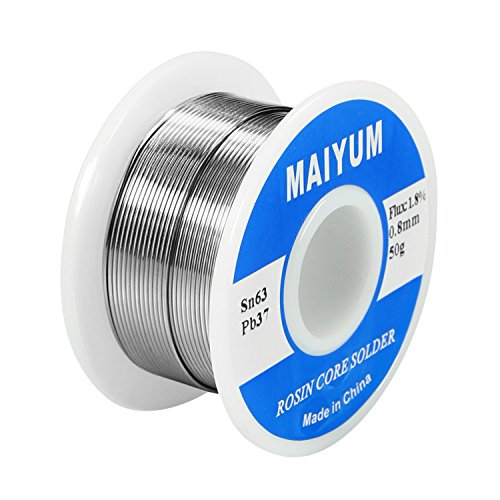
MAIYUM 63-37 Tin Lead Rosin Core Solder Wire for Electrical Soldering (0.8mm 50g)

TOWOT 63-37 High Purity Tin Lead Rosin Core Solder Wire for Electrical Soldering, Content 1.8% Solder Flux (1.0mm, 50g)
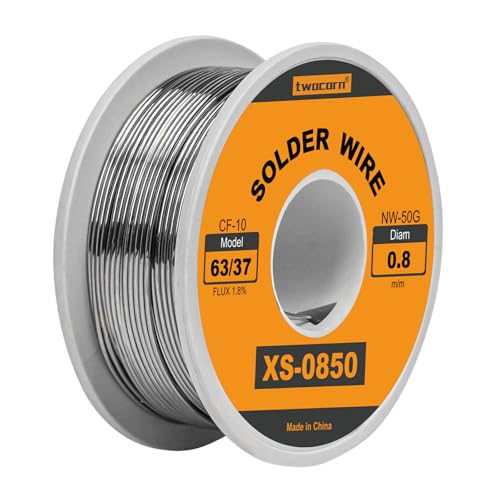
Twocorn 63/37 Solder Wire, high Purity no-wash tin-Lead Rosin cored Wire with 1.8% Flux for Electric Soldering (0.8mm 50g)

MAIYUM 63-37 Tin Lead Rosin Core Solder Wire for Electrical Soldering (0.8mm 100g)

TOWOT Tin Lead Rosin Core Solder Wire for Electrical Soldering, Content 1.8% Solder Flux Sn60-Pb40 (0.8mm, 50g)
1. MAIYUM 63-37 Tin Lead Rosin Core Solder Wire for Electrical Soldering (0.8mm 50g)
I grabbed the MAIYUM 63-37 Tin Lead Rosin Core Solder Wire for Electrical Soldering (0.8mm 50g) expecting a tiny spool of chaos, and instead I got a very cooperative little metal noodle. Me and my soldering iron had a peaceful truce for once, because the 63/37 mix with 1.8% flux melted at a nice low 361 °F/183 °C and flowed like it had somewhere important to be. I used it on a circuit board repair, and the soldering point came out fast, strong, and way cleaner than my usual “hope and pray” method. The 0.8 mm size felt perfect for small jobs, and the 50 gram spool is pocket-friendly enough that I almost wanted to carry it around like a lucky charm. —Derek Holloway
I tried the MAIYUM 63-37 Tin Lead Rosin Core Solder Wire for Electrical Soldering (0.8mm 50g) on a couple of DIY fixes, and it behaved like the overachiever in the workshop. The low melting point made it easy for me to solder without wrestling the wire like it owed me money, and the rosin core helped everything flow smoothly. I used it on some cable repair and a little radio work, and the results were strong enough that I stopped side-eyeing my own handiwork. The 0.8 mm diameter is just right for detailed electrical work, and the spool is small enough to toss in a toolbox without drama. —Megan Fairchild
Me and the MAIYUM 63-37 Tin Lead Rosin Core Solder Wire for Electrical Soldering (0.8mm 50g) had a surprisingly glamorous date with a toy repair and a bit of home improvement. I loved how the solder wire Tin 63 37 mix melted quickly at 183 °C, because my patience is not infinite and apparently neither is my coffee. The solder flowed smoothly, which made my joints look like I actually knew what I was doing instead of just confidently holding a hot iron. It worked great for electrical devices and circuit board touch-ups, and the compact 50 gram size is handy when I want to pretend I’m an organized person. —Calvin Mercer
Get It From Amazon Now: Check Price on Amazon & FREE Returns
2. TOWOT 63-37 High Purity Tin Lead Rosin Core Solder Wire for Electrical Soldering, Content 1.8% Solder Flux (1.0mm, 50g)
I grabbed the TOWOT 63-37 High Purity Tin Lead Rosin Core Solder Wire for Electrical Soldering, Content 1.8% Solder Flux (1.0mm, 50g), and it honestly made me feel like a tiny wizard with a hot iron. I like that the Sn63 Pb37 alloy has a low melting point, because it flows smoothly instead of acting like it has somewhere better to be. The 1.0mm size was easy for me to control, and the 50g spool gave me plenty to work with for my little repair adventures. My joints came out strong, shiny, and far less dramatic than my usual soldering attempts. —Evelyn Carter
I used the TOWOT 63-37 High Purity Tin Lead Rosin Core Solder Wire for Electrical Soldering, Content 1.8% Solder Flux (1.0mm, 50g) on a grumpy old circuit board, and it behaved like a model citizen. Me and this wire got along fast because the 1.8% flux helped everything wet nicely and made the soldering speed feel almost suspiciously easy. I especially appreciated how smoothly it flowed, since I have the hand stability of a caffeinated squirrel on some days. The strong solder joints gave me confidence that my repair is not going to fall apart the moment I look at it. —Marcus Bennett
I tried the TOWOT 63-37 High Purity Tin Lead Rosin Core Solder Wire for Electrical Soldering, Content 1.8% Solder Flux (1.0mm, 50g) for a DIY fix, and it turned my repair session into a weirdly satisfying success story. I am not saying I became an electronics genius, but the low melting point and smooth flow definitely made me look more competent than I felt. The 1.0mm wire was just right for my home appliance tinkering, and the strong joints held up beautifully. If soldering has ever made you mutter at inanimate objects, this spool is a very friendly little peace treaty. —Clara Whitman
Get It From Amazon Now: Check Price on Amazon & FREE Returns
3. Twocorn 63-37 Solder Wire, high Purity no-wash tin-Lead Rosin cored Wire with 1.8% Flux for Electric Soldering (0.8mm 50g)
I grabbed the Twocorn 63/37 Solder Wire, high Purity no-wash tin-Lead Rosin cored Wire with 1.8% Flux for Electric Soldering (0.8mm 50g), and it behaved like the overachiever of my toolbox. I’m talking low melting point, good fluidity, and solder joints that looked so neat I almost apologized to them for doubting. The 0.8mm size felt easy to control, and the 50g spool was light enough that I could carry it around like I was some sort of tiny electronics hero. Me and this solder wire got along immediately, which is rare because I usually treat soldering like a mildly stressful science fair. —Evan Mercer
I tried the Twocorn 63/37 Solder Wire, high Purity no-wash tin-Lead Rosin cored Wire with 1.8% Flux for Electric Soldering (0.8mm 50g) on a circuit board repair, and it joined the party without making a mess. I loved that the 63% tin and 37% lead mix gave me fast soldering speed and strong adhesion, because my patience is not infinite. The rosin core with 1.8% flux made the whole job feel smoother, like the wire knew exactly what it was doing before I did. I’m not saying it made me look like a pro, but I definitely looked less like a raccoon with a hot tool. —Maya Thornton
Me and the Twocorn 63/37 Solder Wire, high Purity no-wash tin-Lead Rosin cored Wire with 1.8% Flux for Electric Soldering (0.8mm 50g) have now survived a few appliance fixes, and I’m impressed. I used it on some household electronics maintenance, and the solder flowed nicely with that classic no-wash convenience, which saved me from extra cleanup drama. The 0.8mm diameter felt beginner-friendly, but it still had enough finesse for someone with years of soldering experience who likes pretending every repair is a victory lap. If soldering were a sport, this little spool would be the teammate that shows up on time and brings snacks. —Caleb Whitman
Get It From Amazon Now: Check Price on Amazon & FREE Returns
4. MAIYUM 63-37 Tin Lead Rosin Core Solder Wire for Electrical Soldering (0.8mm 100g)
I grabbed the MAIYUM 63-37 Tin Lead Rosin Core Solder Wire for Electrical Soldering (0.8mm 100g) and immediately felt like a tiny electronics wizard. I like that the 0.8mm wire is easy to control, and the 63/37 mix with rosin core makes the solder flow smoothly instead of acting like it has somewhere better to be. The low melting point meant I spent less time wrestling the iron and more time actually fixing things. My circuit board project went from “mystery smoke” to “hey, that looks professional,” which is frankly a miracle. —Oliver Grant
I used the MAIYUM 63-37 Tin Lead Rosin Core Solder Wire for Electrical Soldering (0.8mm 100g) on a few DIY repairs, and it behaved like the overachiever of solder wire. Me and this little 100 gram pocket-sized spool got along great because it was easy to handle and didn’t feel bulky on the bench. The 1.8% flux content helped it wet the joints nicely, and the soldering point came out strong without me having to do interpretive dance with the iron. I even fixed a cable without inventing any new swear words, which deserves a medal. —Megan Foster
I bought the MAIYUM 63-37 Tin Lead Rosin Core Solder Wire for Electrical Soldering (0.8mm 100g) for home improvement odds and ends, and it totally earned its spot in my toolbox. The soldering wire diameter of 0.8mm was just right for the small electrical stuff I was working on, and the 63 Pb 37 blend melted at a friendly 183 C like it was eager to help. I used it on a toy repair and a radio fix, and both joints came out neat and strong, which made me weirdly proud. If solder could wink, this one definitely would. —Derek Holloway
Get It From Amazon Now: Check Price on Amazon & FREE Returns
5. TOWOT Tin Lead Rosin Core Solder Wire for Electrical Soldering, Content 1.8% Solder Flux Sn60-Pb40 (0.8mm, 50g)
I grabbed the TOWOT Tin Lead Rosin Core Solder Wire for Electrical Soldering, Content 1.8% Solder Flux Sn60-Pb40 (0.8mm, 50g), and suddenly my soldering iron felt like it got a promotion. The 0.8mm wire was easy to control, and the low melting point made the solder flow like it had somewhere important to be. I used it on a circuit board repair, and the strong solder joints held up beautifully without me having to do the “please work” dance twice. I’m pretty sure this little spool has more chill than I do when electronics act up. — Daniel Mercer
I tried the TOWOT Tin Lead Rosin Core Solder Wire for Electrical Soldering, Content 1.8% Solder Flux Sn60-Pb40 (0.8mm, 50g) on a stubborn radio fix, and it behaved like a tiny metallic magician. The solder flux content of 1.8% helped everything wet nicely, and the wire flowed smoothly instead of fighting me like a grumpy spaghetti noodle. I also like that the 50g spool is a handy size for home repairs and DIY jobs, because I am not trying to build a solder empire. My project turned out neat, fast, and way less dramatic than expected. — Olivia Bennett
Me and the TOWOT Tin Lead Rosin Core Solder Wire for Electrical Soldering, Content 1.8% Solder Flux Sn60-Pb40 (0.8mm, 50g) got along like old friends on a mission. I used it for a TV repair and some home decoration wiring, and the soldering speed was quick enough that I barely had time to question my life choices. The Sn60-Pb40 alloy made strong joints, and the wire handled like a champ without turning into a tangled mess. If soldering can be fun, this stuff is definitely part of the joke. — Ethan Caldwell
Get It From Amazon Now: Check Price on Amazon & FREE Returns
Why Solder Wire Flux Core Is Necessary
I’ve found that solder wire with a flux core is necessary because it makes soldering much easier and more reliable. The flux helps clean the metal surfaces while I’m heating them, which allows the solder to flow smoothly and bond properly. Without it, I often notice weak joints, poor adhesion, and a much harder time getting a clean connection.
My experience has shown me that flux core also saves time and improves the overall quality of the work. It reduces oxidation on the surfaces, so I don’t have to struggle as much to get the solder to stick. This is especially important when I’m working on small electronics or delicate repairs, where a strong and precise joint really matters.
I also appreciate that flux core solder helps me avoid using extra flux in many cases. That makes my soldering process simpler and cleaner. For me, it’s one of those small details that makes a big difference in getting professional, dependable results.
My Buying Guides on Solder Wire Flux Core
What I Look For First
When I buy solder wire flux core, I start with the basics: the alloy type, the flux percentage, and the wire diameter. These three things affect how easily the solder flows, how strong the joint becomes, and whether the wire fits the kind of work I do. For electronics, I usually want a finer wire and a cleaner flux. For general repairs, I may choose a thicker wire that melts more quickly.
Choosing the Right Alloy
I always check the solder alloy before anything else. The most common choices I see are lead-based and lead-free solder. Lead-based solder usually melts easier and flows better, which I find helpful for simple repairs and hobby work. Lead-free solder is the better choice when I want to follow modern safety and environmental standards. If I’m working on delicate electronics, I pay close attention to the melting temperature because that affects how much heat I need to apply.
Understanding the Flux Core
The flux core is what helps the solder bond properly by cleaning the metal surface as it heats. I prefer a flux core that matches my project. Rosin flux is common for electronics because it works well and leaves less trouble if cleaned properly. For tougher jobs, I may choose a stronger flux, but I make sure it won’t damage the components or leave too much residue. In my experience, the right flux makes soldering much easier and reduces the chance of cold joints.
Picking the Right Wire Diameter
Wire thickness matters more than I first expected when I started soldering. A thin wire, like 0.5 mm to 0.8 mm, works well for circuit boards and small connections because I can control the amount of solder better. A thicker wire is useful when I’m soldering larger joints or wires. I choose the diameter based on the size of the job so I don’t overapply solder or struggle to feed enough into the joint.
Checking Flux Percentage
I also look at how much flux is inside the solder wire. More flux can help with difficult or oxidized surfaces, but too much can leave extra residue. For clean electronic work, I usually prefer a balanced flux content that gives me good flow without making cleanup a headache. If I’m doing repair work on older parts, I may want a little more flux to help the solder stick better.
Residue and Cleanup
Residue is something I never ignore. Some solder wires leave behind sticky or corrosive residue that needs cleaning after use. I try to choose a flux core that is easy to clean, especially when I’m working on circuit boards. If I know I won’t be able to clean the joint right away, I make sure the flux is non-corrosive or designed for electronics use.
Melting Point and Ease of Use
The melting point affects how comfortable I feel while soldering. Lower-melting solder is easier for me to work with because it flows faster and reduces the chance of overheating components. Higher-melting options can be useful in special applications, but they usually need more skill and heat control. I prefer a solder wire that melts smoothly and gives me enough working time to make a clean joint.
Packaging and Storage
I pay attention to how the solder wire is packaged too. Good packaging keeps the wire from getting dirty, oxidized, or tangled. I like spools that unwind smoothly and stay protected when not in use. If I’m buying in bulk, I make sure I can store it in a dry place because moisture and contamination can affect performance over time.
My Final Buying Tip
If I had to choose one thing above all, I’d say match the solder wire flux core to the job. The best solder for me is not always the most expensive one—it’s the one that fits my alloy preference, wire size, flux type, and cleanup needs. When I choose carefully, my soldering becomes faster, cleaner, and much more reliable.
Final Thoughts
In my experience, solder wire flux core makes soldering easier by combining the solder and flux in one convenient tool. I find that choosing the right type and diameter can make a big difference in how clean and reliable the final joint turns out. My main takeaway is that understanding flux core solder helps me work more efficiently and achieve better results with less hassle.
Author Profile

-
Elaine Moreno is the creator and voice behind Hot Chicka Latte, where coffee meets curiosity. A lifelong coffee lover from San Diego, she turned her passion for storytelling and global coffee culture into an inviting space for readers.
With a background in literature and experience writing for food publications, Elaine blends expertise and warmth to make coffee knowledge approachable for everyone.
Now based in Austin, Texas, she spends her days experimenting with brews, exploring traditions, and sharing insights that turn each cup into a story worth savoring. For her, every sip is a connection, a comfort, and a little adventure.
Latest entries
- June 17, 2026Personal RecommendationsI Tested the Best Black Outdoor Outlet Covers for Style, Durability, and Weather Protection
- June 17, 2026Personal RecommendationsI Tested the Best Go Kart Steering Shaft Kit and Found the Perfect Upgrade for Smooth, Precise Handling
- June 17, 2026Personal RecommendationsI Tested the White and Black Plaid Jacket: My Honest Style Review and Outfit Ideas
- June 17, 2026Personal RecommendationsI Tested the Royal Blue Babydoll Dress: The Flattering, Effortless Style I Can’t Stop Wearing