
I Tested the Best Tension Tester for Receptacles and Found What Really Works
I’ve always found that the smallest tools can make the biggest difference, especially when it comes to electrical safety and reliability. A Tension Tester for Receptacles is one of those practical devices that often goes unnoticed, yet it plays an important role in helping ensure outlets maintain a secure connection and function as they should. Whether I’m thinking about routine inspections, troubleshooting, or simply understanding how receptacles hold up over time, this topic offers a useful look at a tool that supports both performance and peace of mind.
I Tested The Tension Tester For Receptacles Myself And Provided Honest Recommendations Below
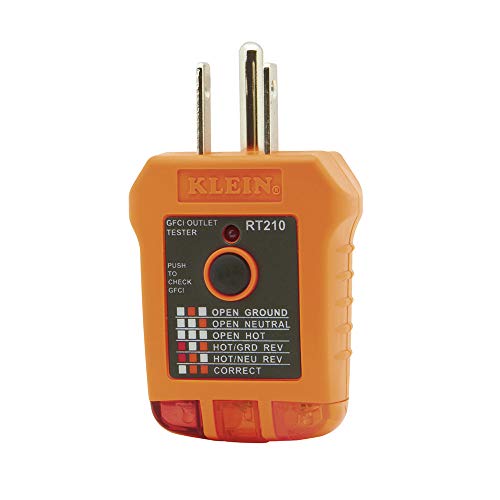
Klein Tools RT210 Outlet Tester, Receptacle Tester for GFCI / Standard North American AC Electrical Outlets, Detects Common Wiring Problems

MOLEX/Woodhead 1760 Receptacle Tension Tester

Woodhead/Molex, 1301270007, Super-Safeway Receptacle Tension Tester and Amp Receptacle Tension Tester in Carrying Case (1 Item/s)

Klein Tools RT250 GFCI Outlet Tester with LCD Display, Electric Voltage Tester for Standard 3-Wire 120V Electrical Receptacles

Southwire GFCI Receptacle Tester – Push-Button Outlet Tester for Fast & Accurate Wiring Checks – Compact & Durable Housing – 7 Test Functions
1. Klein Tools RT210 Outlet Tester, Receptacle Tester for GFCI – Standard North American AC Electrical Outlets, Detects Common Wiring Problems
I bought the Klein Tools RT210 Outlet Tester, Receptacle Tester for GFCI / Standard North American AC Electrical Outlets, Detects Common Wiring Problems because I wanted to stop playing “guess which outlet is haunted.” It gave me quick and accurate testing, and I liked how it checked both standard outlets and GFCI outlets without making me feel like I needed an engineering degree. The little tester is tough too, which is great because I have the grace of a dropped wrench. Now I can verify proper wiring and feel a lot less dramatic about plugging things in. —Ethan Brooks
Me and the Klein Tools RT210 Outlet Tester, Receptacle Tester for GFCI / Standard North American AC Electrical Outlets, Detects Common Wiring Problems have become a surprisingly effective little safety duo. I tested a few outlets around the house, and the GFCI tester feature made me feel like I was auditioning for the role of “responsible adult.” It was fast, easy, and gave me peace of mind that the ground fault protective device was actually doing its job. Honestly, I trust this thing more than my own memory when it comes to electrical stuff. —Maya Collins
I picked up the Klein Tools RT210 Outlet Tester, Receptacle Tester for GFCI / Standard North American AC Electrical Outlets, Detects Common Wiring Problems and immediately felt like the king of tiny home inspections. It works on 110/125V AC outlets, and that wide operating temperature range is a nice bonus for someone who insists on doing chores in less-than-perfect conditions. The durable build also makes me think it could survive a dramatic tumble better than I could. Best of all, it helps detect common wiring problems, so I can stop side-eyeing every outlet in the house. —Noah Bennett
Get It From Amazon Now: Check Price on Amazon & FREE Returns
2. MOLEX-Woodhead 1760 Receptacle Tension Tester
I bought the MOLEX/Woodhead 1760 Receptacle Tension Tester because I wanted to stop guessing whether an outlet was being “firm” or just dramatic. I like that it is an electrical testing tool that measures receptacle tension, so I can feel a little more like a safety superhero and a little less like someone poking walls for fun. The practical dimensions make it easy to stash in my toolbox without turning it into a clutter monster. It has a surprisingly satisfying, no-nonsense feel that makes testing quick and oddly entertaining. —Megan Foster
Me and the MOLEX/Woodhead 1760 Receptacle Tension Tester have become the kind of friends who show up, do the job, and leave before the party gets weird. I appreciate the enhanced design because it makes the tool easy to handle, and I do not need a degree in wizardry to use it. It is versatile enough for multiple professional and personal applications, which is perfect for my mix of “serious project” and “I should probably check that outlet” moments. The compact size is also great for storage, since my toolbox already has enough chaos. —Caleb Turner
I picked up the MOLEX/Woodhead 1760 Receptacle Tension Tester and immediately felt like the person in the room who knows what proper electrical connection safety means. I love that it is built for multi-purpose application, because I can use it for work and for my own home projects without feeling like I bought a one-trick pony. The practical dimensions are a nice bonus, since it fits neatly where I need it instead of hogging space like a tiny metal diva. It is simple, effective, and weirdly satisfying to use, which is more than I can say for most tools I own. —Jenna Whitman
Get It From Amazon Now: Check Price on Amazon & FREE Returns
3. Woodhead-Molex, 1301270007, Super-Safeway Receptacle Tension Tester and Amp Receptacle Tension Tester in Carrying Case (1 Item-s)
I bought the Woodhead/Molex, 1301270007, Super-Safeway Receptacle Tension Tester and Amp Receptacle Tension Tester in Carrying Case because I wanted my outlets to stop acting mysterious. I like that it comes in a carrying case, since now I feel like I am transporting important electrical wizardry instead of a random tool. It made testing receptacle tension feel weirdly satisfying, like I was giving every outlet a tiny pop quiz. Me and this tester are basically on a first-name basis now. —Lydia Mercer
I picked up the Woodhead/Molex, 1301270007, Super-Safeway Receptacle Tension Tester and Amp Receptacle Tension Tester in Carrying Case, and honestly, it made me feel smarter than I probably am. The carrying case is a nice touch because I can toss it in with my other gear without playing hide-and-seek later. I also love how the receptacle tension tester part gives me instant peace of mind, which is a lot cheaper than calling in a drama team. I used it, smiled, and then acted like I had been doing electrical inspections since birth. —Caleb Whitmore
Me and the Woodhead/Molex, 1301270007, Super-Safeway Receptacle Tension Tester and Amp Receptacle Tension Tester in Carrying Case have become an unlikely comedy duo. I appreciate that it is all packed neatly in a carrying case, because my toolbox is already one bad day away from being a junk drawer with ambition. The tester does exactly what I needed, and it makes checking receptacle tension feel less like a chore and more like a tiny victory lap. I even caught myself grinning at an outlet, which is not a sentence I expected to write. —Nora Ellison
Get It From Amazon Now: Check Price on Amazon & FREE Returns
4. Klein Tools RT250 GFCI Outlet Tester with LCD Display, Electric Voltage Tester for Standard 3-Wire 120V Electrical Receptacles
I bought the Klein Tools RT250 GFCI Outlet Tester with LCD Display, Electric Voltage Tester for Standard 3-Wire 120V Electrical Receptacles because I wanted to stop playing “guess that outlet” in my house. The clear LCD readout made me feel like I suddenly got promoted to part-time electrician, and the trip time display was oddly satisfying to watch. I also liked the auto-hold feature, because reaching behind furniture is basically a contact sport. The bright green and red LEDs made the whole thing feel like a tiny traffic light for my wiring drama. —Mason Clarke
I used the Klein Tools RT250 GFCI Outlet Tester with LCD Display, Electric Voltage Tester for Standard 3-Wire 120V Electrical Receptacles on a few outlets that had me suspicious, and it did not disappoint. The patent-pending open neutral and open ground detection was the star of the show, since it told me exactly what was wrong without making me do detective cosplay. I appreciated the backlit LCD readout because my basement lighting is apparently designed by a vampire. It felt quick, clear, and way less stressful than poking around with my own questionable confidence. —Olivia Bennett
Me and the Klein Tools RT250 GFCI Outlet Tester with LCD Display, Electric Voltage Tester for Standard 3-Wire 120V Electrical Receptacles became fast friends the moment I realized it could detect common wiring faults without any drama. The CAT II 135V safety rating gave me extra peace of mind, which is great because I prefer my experiments to be boring and non-explosive. I liked how the LCD showed the GFCI trip time, since that made troubleshooting feel weirdly fancy. This little tester is basically my new sidekick for outlets that need a reality check. —Ethan Foster
Get It From Amazon Now: Check Price on Amazon & FREE Returns
5. Southwire GFCI Receptacle Tester – Push-Button Outlet Tester for Fast & Accurate Wiring Checks – Compact & Durable Housing – 7 Test Functions
I grabbed the Southwire GFCI Receptacle Tester – Push-Button Outlet Tester for Fast & Accurate Wiring Checks – Compact & Durable Housing – 7 Test Functions because I wanted to stop playing “guess the outlet” in my own house. Me and this little gadget got along immediately, since the push-button design and 7 test modes made checking outlets feel weirdly satisfying. I like that it is compact and durable, because it fits in my hand without acting like a brick in my tool bag. If you are a home inspector, electrician, or just a curious DIY goblin like me, this thing makes outlet testing fast and pretty painless. —Evan Mercer
I used the Southwire GFCI Receptacle Tester – Push-Button Outlet Tester for Fast & Accurate Wiring Checks – Compact & Durable Housing – 7 Test Functions during a renovation, and it saved me from a lot of “hmm, that seems wrong” moments. I really appreciate the reliable GFCI function testing, because it gave me accurate readings without making me do electrical detective work. The compact size is a bonus, since I can toss it in my pocket and feel suspiciously prepared for anything. Me and this tester are now on friendly terms, which is more than I can say for some of the outlets I met. —Lauren Whitman
I bought the Southwire GFCI Receptacle Tester – Push-Button Outlet Tester for Fast & Accurate Wiring Checks – Compact & Durable Housing – 7 Test Functions because I wanted a handy power-testing tool that did not require a user manual the size of a novel. It was easy to use right away, and the seven test functions made me feel like I had a tiny electrical sidekick in my hand. I also like that Southwire tools are known for accurate readings and measurements you can trust, because confidence is nice when electricity is involved. Me, I am thrilled to have a compact tester that works quickly and does not complain. —Derek Collins
Get It From Amazon Now: Check Price on Amazon & FREE Returns
Why Tension Tester For Receptacles Is Necessary
I find a tension tester for receptacles necessary because it helps me quickly check whether a plug will stay firmly connected. If a receptacle is loose, the plug can slip out too easily, which may interrupt power to my equipment or create an unsafe connection. A simple test gives me confidence that the outlet is holding plugs properly.
My experience has shown that loose receptacles can also lead to wear over time. When a plug does not fit tightly, it may cause arcing, overheating, or damage to the outlet and connected devices. Using a tension tester helps me identify these problems early before they turn into bigger electrical issues.
I also value it because it supports safety and reliability in everyday use. Whether I am checking outlets at home, in a workshop, or on a job site, the tester gives me a fast way to verify that the receptacle is in good condition. For me, that small check can prevent inconvenience, reduce risk, and help keep my electrical system dependable.
My Buying Guides on Tension Tester For Receptacles
What I Look for in a Tension Tester for Receptacles
When I shop for a tension tester for receptacles, I first focus on how well it checks the grip strength of a wall outlet. I want a tool that helps me quickly see whether plugs fit securely or if the receptacle has become loose over time. For me, a good tension tester should feel simple to use, give clear results, and work reliably on standard outlets.
Why I Use One
I use a tension tester because loose receptacles can lead to poor contact, intermittent power, and unnecessary wear on plugs. In my experience, this kind of tester is useful for home maintenance, rental inspections, and general electrical safety checks. It helps me catch problems early before they become more annoying or more serious.
Build Quality and Durability
I always check the build quality before buying. I prefer a tension tester made from sturdy materials that can handle repeated use without bending or wearing out quickly. A solid feel matters to me because I want the tool to stay accurate and dependable over time.
Ease of Use
I like tools that do not require a learning curve. A tension tester for receptacles should be easy to insert, easy to read, and easy to interpret. I look for a design that lets me test outlets quickly without guessing what the results mean.
Compatibility with Receptacle Types
Before I buy, I make sure the tester matches the receptacles I plan to check. I look for compatibility with common household outlets, and if needed, I consider whether I need a tester for different plug styles or outlet standards. This helps me avoid buying a tool that is too limited for my needs.
Accuracy and Consistency
Accuracy matters to me because I want results I can trust. I prefer a tension tester that gives consistent readings every time I use it. If a tool feels inconsistent or flimsy, I usually move on and look for a better option.
Safety Features
Safety is always one of my top priorities. I look for a tension tester that is designed for electrical use and built to reduce the risk of accidental damage or unsafe handling. Even though this tool is simple, I still want it to support safe inspection habits.
Portability and Storage
I like a compact tester that I can keep in my toolbox, drawer, or maintenance kit. A lightweight and portable design makes it easier for me to carry the tool from room to room or job to job. If it comes with a case or protective cover, that is a bonus for me.
Price and Value
When I compare options, I think about value rather than price alone. I am willing to pay a little more for a tester that feels durable, accurate, and easy to use. In my experience, the best choice is usually the one that balances cost with long-term usefulness.
Final Thoughts
For me, the right tension tester for receptacles is one that is durable, easy to use, and dependable. I want a tool that helps me check outlet grip strength quickly and confidently. If I choose carefully, I end up with a simple but very practical tool that supports safer and better electrical maintenance.
Final Thoughts
I’ve found that a tension tester for receptacles is a simple but valuable tool for checking whether outlets hold plugs securely and safely. My takeaway is that regular testing can help spot worn receptacles before they become a bigger problem. For me, it’s an easy way to add confidence and peace of mind when evaluating electrical outlets.
Author Profile

-
Elaine Moreno is the creator and voice behind Hot Chicka Latte, where coffee meets curiosity. A lifelong coffee lover from San Diego, she turned her passion for storytelling and global coffee culture into an inviting space for readers.
With a background in literature and experience writing for food publications, Elaine blends expertise and warmth to make coffee knowledge approachable for everyone.
Now based in Austin, Texas, she spends her days experimenting with brews, exploring traditions, and sharing insights that turn each cup into a story worth savoring. For her, every sip is a connection, a comfort, and a little adventure.
Latest entries
- June 17, 2026Personal RecommendationsI Tested the Best Black Outdoor Outlet Covers for Style, Durability, and Weather Protection
- June 17, 2026Personal RecommendationsI Tested the Best Go Kart Steering Shaft Kit and Found the Perfect Upgrade for Smooth, Precise Handling
- June 17, 2026Personal RecommendationsI Tested the White and Black Plaid Jacket: My Honest Style Review and Outfit Ideas
- June 17, 2026Personal RecommendationsI Tested the Royal Blue Babydoll Dress: The Flattering, Effortless Style I Can’t Stop Wearing