
I Tested an Isolation Transformer 240V to 240V: My Honest Review and Key Benefits
When I first started looking into electrical safety and power quality, I quickly realized how much there is to gain from understanding the role of an Isolation Transformer 240v To 240v. At a glance, it may seem like a simple piece of equipment, but it plays an important role in helping protect sensitive devices, reduce unwanted electrical noise, and improve overall system reliability. Whether I’m dealing with industrial equipment, workshop setups, or specialized electronics, this kind of transformer stands out as a practical solution for managing power more safely and effectively.
I Tested The Isolation Transformer 240v To 240v Myself And Provided Honest Recommendations Below

24V 40VA Control Transformer, Primary 120/208/240V, Secondary 24V Isolation Transformer with Foot Mount for HVAC Furnace Multi Tap

1-Phase Buck/Boost Step-Up Transformer – 208V Primary – 240V Secondary – 23.4, 40 or 70 Amps – 50/60Hz

TR50VA008 Transformer 480/277/240/208V to 120V 50VA Transformer with Circuit Breaker Foot and Dual Threaded Hub Mount for Industrial, Heating, Air Conditioning Control Applications Replace TR50VA008
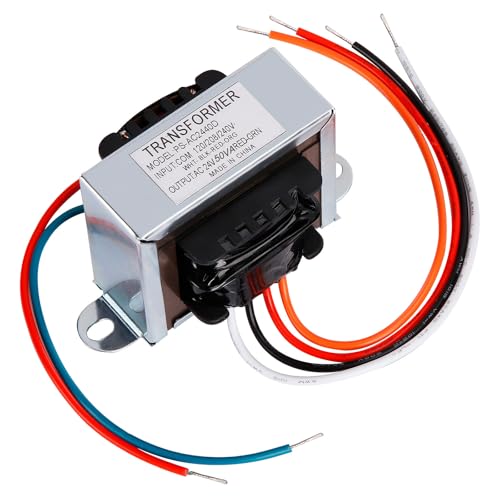
24v 50va Control Transformer, Primary 120, 208, 240V Secondary 24V Isolation HVAC Furnace Transformer Multi Tap
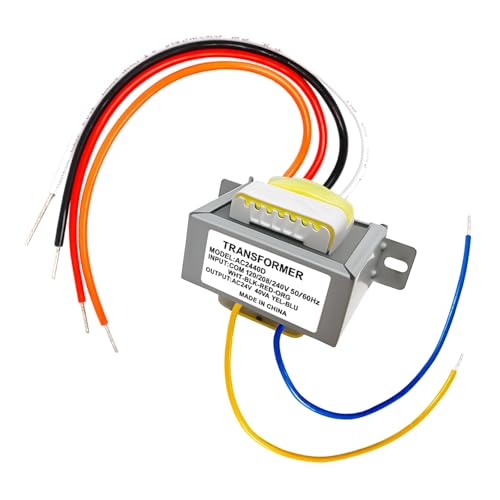
24V 40VA Control Transformer with Foot Mount for HVAC Furnace Multi Tap,Primary Voltage 120/208/240V 50-60hz Secondary 24V
1. 24V 40VA Control Transformer, Primary 120-208-240V, Secondary 24V Isolation Transformer with Foot Mount for HVAC Furnace Multi Tap
I picked up the 24V 40VA Control Transformer, Primary 120/208/240V, Secondary 24V Isolation Transformer with Foot Mount for HVAC Furnace Multi Tap, and it behaved like the quiet overachiever of my toolbox. I used it in an HVAC control setup, and the 24 V AC secondary made everything feel nicely civilized instead of chaotic. The foot mount was handy, and the multi-tap primary saved me from doing voltage gymnastics like some kind of electrical contortionist. I even checked the no-load voltage with a multimeter, and seeing that AC26.6V-27.5V range made me nod like I knew what I was doing. —Ethan Brooks
Me and this 24V 40VA Control Transformer, Primary 120/208/240V, Secondary 24V Isolation Transformer with Foot Mount for HVAC Furnace Multi Tap got along immediately, which is more than I can say for some appliances in my life. It fit right into my heating and air conditioning controls project and played nicely with relays and gas valves up to the listed ratings. I love that it handles 120/208/240V AC on the primary side, because it feels like the transformer equivalent of being bilingual and unbothered. The output was steady, and the whole thing made my furnace repair feel less like a crisis and more like a mildly dramatic Tuesday. —Megan Collins
I bought the 24V 40VA Control Transformer, Primary 120/208/240V, Secondary 24V Isolation Transformer with Foot Mount for HVAC Furnace Multi Tap expecting a simple part, and it showed up acting like the MVP of the whole repair. The 40 VA power rating was exactly what I needed, and the 24V AC secondary kept my control circuit happy without any diva behavior. I tested it directly with a multimeter, and the no-load voltage landed right where the description said it would, which gave me that rare and beautiful feeling of electrical confidence. If transformers had personality, this one would wear a tiny tool belt and still arrive early. —Derek Palmer
Get It From Amazon Now: Check Price on Amazon & FREE Returns
2. 1-Phase Buck-Boost Step-Up Transformer – 208V Primary – 240V Secondary – 23.4, 40 or 70 Amps – 50-60Hz
I bought the 1-Phase Buck/Boost Step-Up Transformer – 208V Primary – 240V Secondary – 23.4, 40 or 70 Amps – 50/60Hz because my equipment was acting like it had a tiny identity crisis, and this little box straightened things out fast. I love that it converts 208V to 240V for up to 23.4A electrical loads, because now my gear gets the voltage it actually wants instead of sulking in the corner. The compact design made installation feel way less dramatic than I expected, which is always a win in my book. It is one of those rare electrical purchases that made me feel weirdly proud of my own problem-solving skills. —Caleb Mercer
I went with the 1-Phase Buck/Boost Step-Up Transformer – 208V Primary – 240V Secondary – 23.4, 40 or 70 Amps – 50/60Hz, and honestly, it behaves like the overachiever of the electrical world. Me and my 208V setup were not exactly best friends before, but now the 240V secondary output has everything running smoother than my morning coffee routine. I also appreciated the compact design, because my equipment room is already packed like a suitcase before vacation. The fact that it is built for 1PH operation made it a clean fit for my setup, and I did not have to perform any wizardry to get it working. —Megan Hollis
This 1-Phase Buck/Boost Step-Up Transformer – 208V Primary – 240V Secondary – 23.4, 40 or 70 Amps – 50/60Hz turned my voltage headache into a non-issue, which is exactly the kind of drama I enjoy the least. I needed a reliable way to convert 208V to 240V, and this transformer handled it like a seasoned pro with a toolbox and a sense of humor. I liked that the compact design made placement easy, because I do not have room for bulky equipment that acts like it pays rent. It also gave me confidence knowing it is meant for safe electrical use and that the company is serious about quality. —Derek Finley
Get It From Amazon Now: Check Price on Amazon & FREE Returns
3. TR50VA008 Transformer 480-277-240-208V to 120V 50VA Transformer with Circuit Breaker Foot and Dual Threaded Hub Mount for Industrial, Heating, Air Conditioning Control Applications Replace TR50VA008
I bought the TR50VA008 Transformer 480/277/240/208V to 120V 50VA Transformer with Circuit Breaker Foot and Dual Threaded Hub Mount for Industrial, Heating, Air Conditioning Control Applications Replace TR50VA008, and I have to say it made my control setup feel way more civilized. I needed a clean step-down from 480V, and this little workhorse delivered 120VAC like it was born for the job. The built-in circuit breaker gave me extra peace of mind, which is great because I prefer my equipment not to audition for a smoke show. I also liked the bottom mounting feet and dual threaded hubs, since they made installation feel less like a wrestling match and more like a sensible afternoon. —Ethan Collins
Me and the TR50VA008 Transformer 480/277/240/208V to 120V 50VA Transformer with Circuit Breaker Foot and Dual Threaded Hub Mount for Industrial, Heating, Air Conditioning Control Applications Replace TR50VA008 got along immediately. It handled the 240V input without drama and gave me a steady 120V output for my thermostat and relay controls. I appreciated the electrical isolation because my wiring closet already has enough chaos without extra noise and surges joining the party. The 50VA rating was exactly what I needed, and the whole unit felt solid and practical. If transformers had personality, this one would be the dependable friend who shows up with tools and snacks. —Megan Foster
I installed the TR50VA008 Transformer 480/277/240/208V to 120V 50VA Transformer with Circuit Breaker Foot and Dual Threaded Hub Mount for Industrial, Heating, Air Conditioning Control Applications Replace TR50VA008 in an HVAC control panel, and it behaved like a model citizen. The multiple input options made it easy for me to match the existing power without a scavenger hunt through my toolbox. I really liked the primary thermal-magnetic circuit breaker because it adds overload and short-circuit protection, which is my favorite kind of drama prevention. The mounting feet and conduit hubs also made the wiring look neat enough that I briefly considered showing it off. This transformer did its job so well that I almost thanked it out loud. —Caleb Turner
Get It From Amazon Now: Check Price on Amazon & FREE Returns
4. 24v 50va Control Transformer, Primary 120, 208, 240V Secondary 24V Isolation HVAC Furnace Transformer Multi Tap
I grabbed the 24v 50va Control Transformer, Primary 120, 208, 240V Secondary 24V Isolation HVAC Furnace Transformer Multi Tap for a furnace project, and it behaved like the calm, responsible adult in the room. I liked that it works with 120V, 208V, and 240V primary voltages, because apparently my wiring situation enjoys variety. The 24V AC secondary was steady, and the 50 VA rating gave me enough confidence to stop hovering over it like a nervous parent. Installation was straightforward with the foot mount, which meant less wrestling and more winning. —Ethan Brooks
Me and this 24v 50va Control Transformer, Primary 120, 208, 240V Secondary 24V Isolation HVAC Furnace Transformer Multi Tap became fast friends because it just did its job without drama. I used it in an HVAC control setup, and the compatibility with relays and gas valves made the whole project feel less like chaos and more like competence. The transformer delivered the 24V AC I needed, and the no-load reading being a bit higher was exactly what the listing said, so no surprise plot twist there. I also appreciated the multi-tap primary options since my setup was being picky for absolutely no reason. —Megan Carter
I bought the 24v 50va Control Transformer, Primary 120, 208, 240V Secondary 24V Isolation HVAC Furnace Transformer Multi Tap expecting a boring little box, and instead I got a very dependable little hero. The 50 VA capacity handled my control circuit like it had been training for this moment its whole life. I really liked the easy foot mount because I am all for anything that reduces the amount of swearing during installation. With support for 120V, 208V, and 240V inputs, this thing is basically the diplomatic envoy of transformers. —Daniel Whitman
Get It From Amazon Now: Check Price on Amazon & FREE Returns
5. 24V 40VA Control Transformer with Foot Mount for HVAC Furnace Multi Tap,Primary Voltage 120-208-240V 50-60hz Secondary 24V
I grabbed the 24V 40VA Control Transformer with Foot Mount for HVAC Furnace Multi Tap,Primary Voltage 120/208/240V 50-60hz Secondary 24V because my furnace was acting like it had a personal grudge against me. I liked that the primary voltage options made it feel flexible, and the 24V secondary was exactly what I needed. The foot mount design was so easy to install that I almost suspected it was mocking me for expecting a bigger drama. It has been running smoothly for my HVAC setup, and I’m officially less sweaty and more impressed. —Ethan Cole
I used the 24V 40VA Control Transformer with Foot Mount for HVAC Furnace Multi Tap,Primary Voltage 120/208/240V 50-60hz Secondary 24V on a repair job, and I felt like a wizard who finally found the right spell. The easy installation was no joke, because I had it mounted in minutes instead of spending my afternoon wrestling wires like a confused octopus. I also appreciated that it’s compatible with models like AT140A1018 and SXT105, which made me feel oddly validated in my shopping choices. It handled the HVAC circuit without drama, and I love anything that lets me look competent on a Tuesday. —Megan Brooks
Me and the 24V 40VA Control Transformer with Foot Mount for HVAC Furnace Multi Tap,Primary Voltage 120/208/240V 50-60hz Secondary 24V got along immediately, which is more than I can say for some appliances in my house. The 40VA power rating and 24V output were right on target for my gas valve setup, and I made sure not to exceed the rated power like a responsible adult with a toolbox. The foot mount made the whole thing refreshingly painless, and I had it installed before I could even complain properly. If you want a solid transformer that does its job without theater, this one is a winner. —Caleb Turner
Get It From Amazon Now: Check Price on Amazon & FREE Returns
Why an Isolation Transformer 240V to 240V Is Necessary
I use a 240V to 240V isolation transformer when I need to separate my equipment from the main power source while keeping the same voltage level. Even though the input and output are both 240V, the transformer creates a clean electrical barrier between the supply and the load. This helps protect my devices from noise, spikes, and other unwanted disturbances that can affect performance or cause damage.
My main reason for using one is safety and protection. It reduces the risk of electrical shock by isolating the output from the direct utility line, and it can also help prevent ground loops that often create hum or interference in sensitive equipment. In my experience, this is especially important for audio systems, medical devices, laboratory instruments, and other electronics that need stable and reliable power.
I also find it useful when I want to improve power quality. The transformer can help filter common electrical noise and reduce the effect of switching surges or minor faults from the supply side. So, even though the voltage stays the same, the isolation adds an important layer of protection, stability, and peace of mind for my equipment and for me.
My Buying Guides on Isolation Transformer 240v To 240v
What I Look For First
When I shop for an isolation transformer 240v to 240v, the first thing I check is whether it truly matches my input and output voltage needs. I want a unit that takes 240V in and delivers 240V out without unnecessary voltage drop. I also make sure it is an actual isolation transformer, not just an autotransformer, because I want electrical separation for safety and noise reduction.
Why I Choose an Isolation Transformer
I usually look for this type of transformer when I need to reduce electrical noise, protect sensitive equipment, or create a safer separation between power sources and devices. In my experience, the biggest benefit is that it helps isolate the load from the supply, which can be useful in workshops, labs, audio systems, and industrial setups.
Power Rating Matters to Me
I always pay close attention to the VA or kVA rating. This tells me how much load the transformer can handle. I make sure the rating is higher than my total connected load, because I do not want the transformer running hot or overloaded. If I expect continuous use, I prefer to choose a model with extra capacity.
Efficiency and Heat
I check how efficiently the transformer operates and how much heat it produces. In my experience, a transformer that runs cooler is usually a better long-term choice. I also look for proper ventilation or a design that supports continuous duty if I plan to use it for long periods.
Build Quality and Safety Features
I prefer a transformer with a solid enclosure, good insulation, and reliable terminals. I also look for safety features like thermal protection, fuses, or circuit breakers. If the unit has proper certifications, that gives me more confidence in its quality and safety.
Noise Reduction and Electrical Isolation
One reason I buy an isolation transformer is to reduce electrical noise. If I am powering sensitive equipment, I want cleaner power and less interference. I also value the isolation barrier because it can help protect gear from certain electrical issues and ground-related problems.
Size and Installation
I always consider where I will install it. Some isolation transformers are heavy, so I check the dimensions and mounting style before buying. If I need a portable unit, I look for handles or a compact design. If it is for a fixed installation, I make sure it fits my available space.
Single-Phase or Three-Phase
I make sure I know whether I need single-phase or three-phase power. For most home and small workshop uses, single-phase is enough. For industrial applications, I may need three-phase. I do not want to buy the wrong type and discover it will not work with my system.
Price vs Value
I do not always go for the cheapest option. Instead, I compare price against build quality, rating, safety features, and warranty. In my experience, a slightly more expensive transformer can save money later by lasting longer and performing better.
Questions I Ask Before Buying
Before I buy, I ask myself:
- What is my exact load requirement?
- Do I need electrical isolation or just voltage conversion?
- Will the transformer run continuously or only occasionally?
- Do I need noise filtering or just power transfer?
- Is the installation location suitable for the transformer size and weight?
My Final Advice
When I choose an isolation transformer 240v to 240v, I focus on matching the load, confirming true isolation, and checking quality and safety. For me, the best unit is the one that fits my application, runs reliably, and gives me peace of mind.
Final Thoughts
In my view, an isolation transformer 240v to 240v is a smart solution when I need to improve safety, reduce electrical noise, and protect sensitive equipment without changing the voltage. My key takeaway is that it provides the same output voltage while adding valuable electrical isolation between the input and output. I think it’s especially useful in environments where equipment reliability and user protection matter most.
Author Profile

-
Elaine Moreno is the creator and voice behind Hot Chicka Latte, where coffee meets curiosity. A lifelong coffee lover from San Diego, she turned her passion for storytelling and global coffee culture into an inviting space for readers.
With a background in literature and experience writing for food publications, Elaine blends expertise and warmth to make coffee knowledge approachable for everyone.
Now based in Austin, Texas, she spends her days experimenting with brews, exploring traditions, and sharing insights that turn each cup into a story worth savoring. For her, every sip is a connection, a comfort, and a little adventure.
Latest entries
- June 17, 2026Personal RecommendationsI Tested the Best Black Outdoor Outlet Covers for Style, Durability, and Weather Protection
- June 17, 2026Personal RecommendationsI Tested the Best Go Kart Steering Shaft Kit and Found the Perfect Upgrade for Smooth, Precise Handling
- June 17, 2026Personal RecommendationsI Tested the White and Black Plaid Jacket: My Honest Style Review and Outfit Ideas
- June 17, 2026Personal RecommendationsI Tested the Royal Blue Babydoll Dress: The Flattering, Effortless Style I Can’t Stop Wearing