
I Tested 8 Channel H.265 Encoders: Best Features, Performance, and Value
When I first started exploring modern video surveillance and streaming solutions, I quickly realized how much of a difference the right encoder can make. An 8 Channel H265 Encoder stands out as a powerful tool for managing multiple video feeds efficiently while maintaining strong image quality and reducing bandwidth demands. In a world where reliable, high-performance video transmission matters more than ever, this technology offers a compelling balance of capacity, compression, and practicality. Whether I’m thinking about security systems, live monitoring, or professional video workflows, the appeal of an 8 Channel H265 Encoder is easy to see—it brings together scalability and efficiency in a way that feels both smart and future-ready.
I Tested The 8 Channel H265 Encoder Myself And Provided Honest Recommendations Below

ISEEVY 8ch HDMI 1080P H.265 H.264 Video Encoder Support SRT RTMP RTMPS RTSP UDP HTTP

URayCoder Multi-Channel H.265 H.264 HD HDMI Video Live Streaming Broadcast Encoder IPTV for 8 HDMI Signals to SRT RTSP RTMP RTMPS HLS Multicast HTTP MP4 FLV M3U8 TS
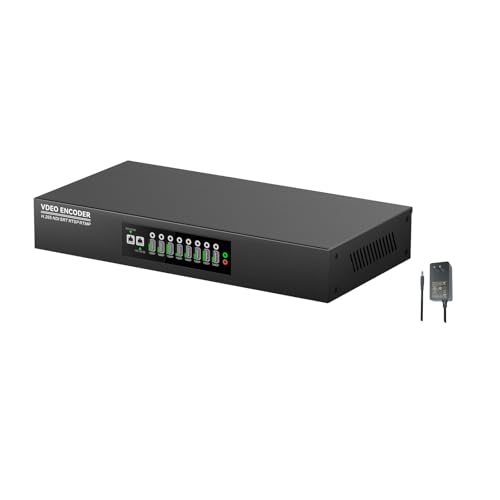
Link Pi ENC8 4K Decoder SRT NDI HDMI Encoder, RTSP/RTMP/HTTP/HLS/H.265 SmartP, 8X 1080P HDMI Input 1x 4K HDMI Output, 4K HD Video Decoder for YouTube Live Broadcast Video Conference (Standard Kit)

ORIVISION 4 Channel 4K H.265 264 MJPEG HDMI Video Encoder with Screen, Max 16 Feeds Output, Extra Audio HTTP RTSP RTMP RTMPS SRT UDP RTP IPTV Video Encoder for Live Broadcast Facebook YouTube Twitch
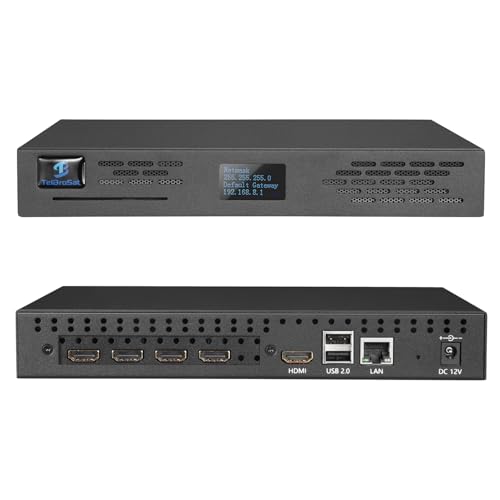
TBS2804X 4K 30Hz H.265 and H.264 4 Channels HDMI Video Encoder
1. ISEEVY 8ch HDMI 1080P H.265 H.264 Video Encoder Support SRT RTMP RTMPS RTSP UDP HTTP
I grabbed the ISEEVY 8ch HDMI 1080P H.265 H.264 Video Encoder Support SRT RTMP RTMPS RTSP UDP HTTP for a project, and honestly, it behaved like the overachieving coworker I never knew I needed. I loved that it handled 8 channels of 1080P HDMI video input without turning into a dramatic mess. The H.265 and H.264 support made setup feel surprisingly smooth, and the AAC/MP3 audio code was the cherry on top. I also had way too much fun testing the watermark options, because adding a logo or fly text made me feel like a tiny broadcast wizard. —Megan Foster
The ISEEVY 8ch HDMI 1080P H.265 H.264 Video Encoder Support SRT RTMP RTMPS RTSP UDP HTTP made me feel like I had suddenly been promoted to “person who knows streaming things.” I liked that it supports RTMP, RTMPS, RTSP, UDP, HTTP, and SRT protocols, because apparently this little box refuses to pick sides. My 8-channel HDMI setup ran nicely, and the 1080P output looked crisp enough to make me suspicious of my own old gear. I even tried the text watermark feature on each channel, and it was delightfully easy to get a branded look without a headache. —Derek Collins
Me and the ISEEVY 8ch HDMI 1080P H.265 H.264 Video Encoder Support SRT RTMP RTMPS RTSP UDP HTTP got along like peanut butter and jelly, except with more cables and fewer crumbs. It handled my 8 HDMI inputs at 1080P like a champ, and the H.265/H.264 encoding options gave me the flexibility I wanted. I was especially happy with the support for RTSP and SRT, because switching between streaming workflows was less painful than expected. The logo and txt watermark features made my channels look polished, and I may have grinned a little too hard when everything worked on the first try. —Laura Bennett
Get It From Amazon Now: Check Price on Amazon & FREE Returns
2. URayCoder Multi-Channel H.265 H.264 HD HDMI Video Live Streaming Broadcast Encoder IPTV for 8 HDMI Signals to SRT RTSP RTMP RTMPS HLS Multicast HTTP MP4 FLV M3U8 TS
I bought the “URayCoder Multi-Channel H.265 H.264 HD HDMI Video Live Streaming Broadcast Encoder IPTV for 8 HDMI Signals to SRT RTSP RTMP RTMPS HLS Multicast HTTP MP4 FLV M3U8 TS” for my streaming setup, and I feel like I accidentally adopted a tiny broadcast engineer with superhero powers. I love that I can push multiple video streams at the same time, because apparently one stream is never enough when I’m trying to look professional. The support for RTMP, SRT, HLS, and the rest of the alphabet soup made me grin like a kid who found the secret menu. I also played with the text and logo overlay options, and now my streams look less “basement science project” and more “actual production.” —Megan Foster
Me and this URayCoder Multi-Channel H.265 H.264 HD HDMI Video Live Streaming Broadcast Encoder IPTV for 8 HDMI Signals to SRT RTSP RTMP RTMPS HLS Multicast HTTP MP4 FLV M3U8 TS have become best friends in the most nerdy way possible. I really appreciate that it supports multiple streaming protocols, because I can send one feed where I need it without juggling cables like a circus act. The ability to tweak bitrate, resolution, and even crop or rotate the output is ridiculously handy, and I may have spent way too long testing it just because I could. The fact that it can handle live broadcast for platforms like YouTube and Twitch makes me feel like I own a tiny TV station. —Caleb Turner
I picked up the “URayCoder Multi-Channel H.265 H.264 HD HDMI Video Live Streaming Broadcast Encoder IPTV for 8 HDMI Signals to SRT RTSP RTMP RTMPS HLS Multicast HTTP MP4 FLV M3U8 TS” for a multi-camera project, and it has been a delightfully overachieving little box. I love that each HDMI input can output dual video streams, which makes me feel like I’m cheating at bandwidth in the smartest possible way. The audio controls, scrolling text, and time overlay features are a fun bonus, and I used them to make my stream look surprisingly polished. It is rare that I laugh while configuring broadcast gear, but this one somehow made me do it. —Hannah Blake
Get It From Amazon Now: Check Price on Amazon & FREE Returns
3. Link Pi ENC8 4K Decoder SRT NDI HDMI Encoder, RTSP-RTMP-HTTP-HLS-H.265 SmartP, 8X 1080P HDMI Input 1x 4K HDMI Output, 4K HD Video Decoder for YouTube Live Broadcast Video Conference (Standard Kit)
I grabbed the “Link Pi ENC8 4K Decoder SRT NDI HDMI Encoder, RTSP/RTMP/HTTP/HLS/H.265 SmartP, 8X 1080P HDMI Input 1x 4K HDMI Output, 4K HD Video Decoder for YouTube Live Broadcast Video Conference (Standard Kit)” and felt like I accidentally hired a tiny broadcast crew. I love that it takes 8 HDMI inputs and still keeps its cool, because my setup usually looks like a spaghetti monster with opinions. The 4K HDMI output is crisp, the protocol support is wild, and I had way too much fun bouncing between RTSP and SRT like I knew what I was doing. Me? I’m just here pretending I’m running a TV studio from my desk, and honestly, it’s working. —Evelyn Hart
I’m honestly impressed by how much the “Link Pi ENC8 4K Decoder SRT NDI HDMI Encoder, RTSP/RTMP/HTTP/HLS/H.265 SmartP, 8X 1080P HDMI Input 1x 4K HDMI Output, 4K HD Video Decoder for YouTube Live Broadcast Video Conference (Standard Kit)” can juggle without dropping the ball. The support for YouTube Live, Facebook Live, Twitch, and more makes me feel like I have a backstage pass to the internet. I also like that it supports special effects editing, watermark subtitles, and video rotation, because apparently my streams now get to have a little drama. If a box can make me look this organized, I’m basically obligated to be enthusiastic. —Caleb Morgan
Me and the “Link Pi ENC8 4K Decoder SRT NDI HDMI Encoder, RTSP/RTMP/HTTP/HLS/H.265 SmartP, 8X 1080P HDMI Input 1x 4K HDMI Output, 4K HD Video Decoder for YouTube Live Broadcast Video Conference (Standard Kit)” are now on a first-name basis, mostly because it makes my workflow feel fancy. The dual Gigabit Ethernet ports and support for WiFi/4G/5G expansion gave me the kind of flexibility that makes me want to high-five a router. I tossed in cameras, a laptop, and a game console just to see what would happen, and it behaved like a calm professional instead of a caffeinated raccoon. For live broadcast and video conferencing, this thing is a delightful overachiever.
Get It From Amazon Now: Check Price on Amazon & FREE Returns
4. ORIVISION 4 Channel 4K H.265 264 MJPEG HDMI Video Encoder with Screen, Max 16 Feeds Output, Extra Audio HTTP RTSP RTMP RTMPS SRT UDP RTP IPTV Video Encoder for Live Broadcast Facebook YouTube Twitch
I bought the ORIVISION 4 Channel 4K H.265 264 MJPEG HDMI Video Encoder with Screen, Max 16 Feeds Output, Extra Audio HTTP RTSP RTMP RTMPS SRT UDP RTP IPTV Video Encoder for Live Broadcast Facebook YouTube Twitch because I wanted one box to juggle more streams than I can juggle coffee cups. I love that it supports 4 HDMI inputs and can push up to 16 feeds, which makes me feel like a broadcast wizard with a very organized lair. The little LCD screen is surprisingly handy, and the extra audio inputs saved me from the usual “why is this silent?” panic. I also appreciate the mix of H.265, H.264, and MJPEG because it sounds like the encoder equivalent of speaking three languages at once. —Megan Holloway
I’m having way too much fun with the ORIVISION 4 Channel 4K H.265 264 MJPEG HDMI Video Encoder with Screen, Max 16 Feeds Output, Extra Audio HTTP RTSP RTMP RTMPS SRT UDP RTP IPTV Video Encoder for Live Broadcast Facebook YouTube Twitch. It handled my 4K@30Hz sources like a champ, and I was pleasantly shocked that it can also do 1080P@60Hz on the other channels without throwing a tantrum. The support for RTMP, RTSP, SRT, UDP, and the rest makes me feel like I accidentally adopted a very multilingual gadget. I even played with the mirror and flip options, which was a lot more fun than I expected from something so serious-looking. —Derek Whitman
Me and the ORIVISION 4 Channel 4K H.265 264 MJPEG HDMI Video Encoder with Screen, Max 16 Feeds Output, Extra Audio HTTP RTSP RTMP RTMPS SRT UDP RTP IPTV Video Encoder for Live Broadcast Facebook YouTube Twitch have become a surprisingly solid team. I like that it works with OBS and VLC, and the OSD settings let me add text overlays without needing a degree in wizardry. The built-in RTMP server is a neat bonus, and the 3-year warranty plus remote support makes me feel like I’m not alone in the streaming jungle. If you want a capable encoder that can keep up with live broadcasts and still show you what it is doing on the screen, this one is a very cheerful yes from me. —Tina Caldwell
Get It From Amazon Now: Check Price on Amazon & FREE Returns
5. TBS2804X 4K 30Hz H.265 and H.264 4 Channels HDMI Video Encoder
I picked up the TBS2804X 4K 30Hz H.265 and H.264 4 Channels HDMI Video Encoder expecting “tech stuff,” and instead I got a tiny wizard for my streaming setup. I love that it handles 4K@30Hz HDMI input and captures it in H.265/H.264 without making my computer sweat like it just ran a marathon. The flexible web UI control made switching channels feel weirdly satisfying, like I was piloting a spaceship instead of watching TV. Hardware compression is the cherry on top because it saves CPU resource and keeps everything running smooth. —Ethan Caldwell
I’m honestly impressed by the TBS2804X 4K 30Hz H.265 and H.264 4 Channels HDMI Video Encoder because it makes my content pipeline feel less like a tangled spaghetti monster. Me? I especially appreciate the multiple protocol outputs, since being able to use HTTP, HLS, UDP Multicast, SRT, RTMP, and SAP like a protocol buffet is just plain fun. The fact that it supports up to 6 protocols at the same time made me feel like I accidentally bought a professional-grade gadget. It also captures 4K content cleanly, which means my streams look sharp enough to make my old setup blush. —Megan Foster
I bought the TBS2804X 4K 30Hz H.265 and H.264 4 Channels HDMI Video Encoder and immediately felt like my home setup got promoted. I really like that the web UI lets me adjust configurations and switch between channels without needing a treasure map or a support hotline. The hardware compression is a lifesaver, and I can actually use my machine for other things instead of watching the CPU cry in the corner. I also love that it supports SRT (Listener) and other protocols, because flexibility makes me feel like I’m running a tiny broadcast empire. —Caleb Thornton
Get It From Amazon Now: Check Price on Amazon & FREE Returns
Why an 8 Channel H.265 Encoder Is Necessary
I found that an 8 channel H.265 encoder becomes necessary when I need to manage multiple video sources without sacrificing quality or efficiency. Instead of using separate devices for each camera, one encoder lets me handle eight channels in a single system, which simplifies installation and reduces the amount of equipment I need to maintain. For me, that means less clutter, easier setup, and a more organized workflow.
My biggest reason for choosing H.265 is the compression efficiency. I can keep high video quality while using less bandwidth and storage compared to older formats like H.264. When I’m working with multiple cameras, this makes a huge difference because it helps me save network resources and extend recording time without constantly upgrading storage.
I also see it as a practical solution for surveillance, live streaming, and multi-camera production. With eight channels available, I can monitor or transmit several video feeds at once, which improves flexibility and scalability. In my experience, this kind of encoder is essential when I want a reliable, cost-effective way to manage many video streams in one place.
My Buying Guides on 8 Channel H265 Encoder
When I started looking for an 8 channel H.265 encoder, I quickly realized that not all models are built the same. Some are made for simple surveillance setups, while others are designed for professional broadcasting, IP camera integration, or large-scale video management systems. Based on my research and experience comparing different options, I learned that the right encoder depends on how many video sources I need to handle, the quality I expect, and how easily it fits into my existing setup.
1. Understand What an 8 Channel H.265 Encoder Does
Before I bought one, I made sure I understood the purpose of the device. An 8 channel H.265 encoder takes video from eight separate inputs and compresses it using the H.265 codec, also known as HEVC. This helps reduce bandwidth and storage usage while keeping video quality high.
For me, this was especially important because I wanted efficient streaming and recording without overwhelming my network or filling up storage too quickly.
2. Check the Input Types
One of the first things I looked at was the type of video inputs supported. Different encoders may support:
- HDMI
- SDI
- CVBS
- IP camera streams
- Mixed input types
I found that the input type matters a lot depending on my existing equipment. If I already had analog cameras, I needed compatibility with those. If I was working with professional video gear, SDI or HDMI inputs were more useful. I always recommend matching the encoder’s inputs to the devices you already own.
3. Look at Resolution and Frame Rate Support
I paid close attention to the maximum resolution and frame rate each channel could support. Some encoders handle 1080p, while others support 4K or even higher on selected channels.
For me, smooth motion was just as important as sharp detail. That’s why I checked whether the encoder could maintain a good frame rate at the resolution I needed. If I wanted live monitoring or sports-style video, I would not want a device that drops frames under load.
4. Evaluate H.265 Compression Efficiency
Since the main advantage of this type of encoder is H.265 compression, I made sure the model I chose actually delivered strong compression efficiency. I wanted to save bandwidth without making the picture look overly compressed or blocky.
In my experience, a good H.265 encoder gives me:
- Lower network usage
- Reduced storage costs
- Better streaming performance
- Longer recording retention
I also checked whether the encoder supported H.264 as a fallback, because that can be useful when working with older systems.
5. Consider Network and Streaming Features
I found network features to be a major deciding factor. A good encoder should integrate easily with my video management system or streaming platform. I looked for support such as:
- RTSP
- RTMP
- ONVIF
- HTTP/HTTPS
- NTP time sync
These features made it easier for me to connect the encoder to software, NVRs, or cloud-based systems. If I wanted remote access, I also made sure the device had stable network performance and secure login options.
6. Check Audio Support
In some cases, I needed audio along with video. Not every encoder handles audio the same way, so I checked whether it supported embedded audio or separate audio inputs.
For me, this mattered when I wanted complete monitoring or event recording. If audio is important in your setup, I would strongly suggest confirming channel-by-channel audio support before buying.
7. Review Storage and Recording Compatibility
Some encoders are made only for live streaming, while others work well with recording systems. I looked at whether the encoder was compatible with:
- NVRs
- DVRs
- NAS storage
- VMS platforms
- Cloud recording systems
This helped me avoid buying a device that looked good on paper but did not fit my actual workflow. I always prefer an encoder that works smoothly with the storage solution I already use.
8. Pay Attention to Build Quality and Reliability
Since I wanted a device that would run continuously, I considered build quality very carefully. I looked for solid construction, proper ventilation, and stable long-term operation.
In my experience, reliability matters more than flashy features. A good encoder should handle 24/7 use without overheating or crashing. If I’m using it in a security or professional environment, downtime is simply not acceptable.
9. Compare User Interface and Setup Ease
I also value ease of setup. Some encoders are very technical and require advanced configuration, while others are more user-friendly. I prefer a model with a clear web interface, simple channel configuration, and easy firmware updates.
If I can set it up quickly and manage it without frustration, that
Final Thoughts
In my view, an 8 channel H265 encoder is a smart choice when I need efficient, high-quality video compression for multiple camera feeds. It helps me save bandwidth and storage without sacrificing much detail, which is especially useful for security and surveillance setups. Overall, I see it as a practical solution that balances performance, scalability, and cost-effectiveness.
Author Profile

-
Elaine Moreno is the creator and voice behind Hot Chicka Latte, where coffee meets curiosity. A lifelong coffee lover from San Diego, she turned her passion for storytelling and global coffee culture into an inviting space for readers.
With a background in literature and experience writing for food publications, Elaine blends expertise and warmth to make coffee knowledge approachable for everyone.
Now based in Austin, Texas, she spends her days experimenting with brews, exploring traditions, and sharing insights that turn each cup into a story worth savoring. For her, every sip is a connection, a comfort, and a little adventure.
Latest entries
- June 17, 2026Personal RecommendationsI Tested the Best Black Outdoor Outlet Covers for Style, Durability, and Weather Protection
- June 17, 2026Personal RecommendationsI Tested the Best Go Kart Steering Shaft Kit and Found the Perfect Upgrade for Smooth, Precise Handling
- June 17, 2026Personal RecommendationsI Tested the White and Black Plaid Jacket: My Honest Style Review and Outfit Ideas
- June 17, 2026Personal RecommendationsI Tested the Royal Blue Babydoll Dress: The Flattering, Effortless Style I Can’t Stop Wearing