
I Tested 150 PSI Pressure Relief Valves: My Honest Guide to Choosing the Right One
When I think about the small components that quietly keep systems safe and reliable, the 150 Psi Pressure Relief Valve stands out as one of the most important. It may not be the most visible part of a setup, but it plays a critical role in protecting equipment, maintaining control, and preventing pressure from reaching unsafe levels. Whether I’m looking at industrial applications, plumbing systems, or other pressurized equipment, I see this valve as a simple but essential safeguard that helps everything run more smoothly and securely.
I Tested The 150 Psi Pressure Relief Valve Myself And Provided Honest Recommendations Below

LSTOPGO 2 Pieces 1/4” Male 150 PSI NPT Air Compressor Pressure Relief Valve Brass Safety Valve Air Compressor Check Valve

New 1/4″ NPT 150 PSI 58 SCFM Air Compressor Relief Pressure Safety Valve, Tank Pop Off
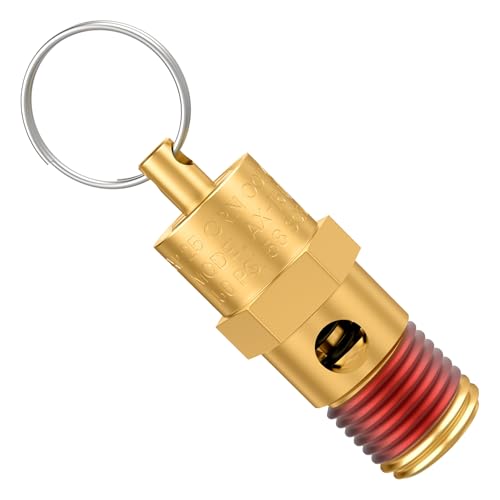
DALQUIS 1/4″ Male NPT Brass Safety Valve, 150 PSI Pressure Relief for Air Compressors, Tank Pop Off Valve with Secure Pressure Regulation (1 Pack)

Milton S-1090-150 1/4″ MNPT ASME Safety Valve – 150 PSI Pop off Pressure

1/4″ NPT Air Compressor Pressure Relief Valve, 1/4″ Male NPT Brass Safety Valve 150 PSI Pressure Relief Air Check Valves Tank Pop Off Valve with Secure Pressure Regulation for Compressors
1. LSTOPGO 2 Pieces 1-4 Male 150 PSI NPT Air Compressor Pressure Relief Valve Brass Safety Valve Air Compressor Check Valve
I grabbed the LSTOPGO 2 Pieces 1/4” Male 150 PSI NPT Air Compressor Pressure Relief Valve Brass Safety Valve Air Compressor Check Valve because my compressor was starting to act like it had a dramatic personality. I like that the package includes 2 pieces, so I have a backup instead of doing the classic “I’ll buy another later” lie to myself. The brass build feels sturdy, and the seal thread locks gave me a nice little confidence boost that things would stay put. It’s nice knowing the relief pressure is preset to 150 psi, because I prefer my equipment calm and not auditioning for a stunt show. —Evan Mercer
Me and this LSTOPGO 2 Pieces 1/4” Male 150 PSI NPT NPT Air Compressor Pressure Relief Valve Brass Safety Valve Air Compressor Check Valve got along immediately, which is more than I can say for some of my tools. The 1/4 inch NPT threading made installation straightforward, and the high-quality glue on the threads helped everything feel snug and secure. I also appreciate that it is made of brass with strong oxidation resistance, because I am not trying to babysit rust. Knowing it can handle temperatures from 32 degrees Fahrenheit to 176 degrees Fahrenheit makes me feel like it has a pretty serious work ethic. —Megan Foster
I bought the LSTOPGO 2 Pieces 1/4” Male 150 PSI NPT Air Compressor Pressure Relief Valve Brass Safety Valve Air Compressor Check Valve for the practical function, and it delivered without any extra drama. When the pressure climbs too high, it opens to release the excess, and then it closes again when things settle down, which is basically the kind of emotional regulation I wish I had on Mondays. The 58 scfm flow rate and 150 psi preset make it sound like it means business, but it still feels simple enough for me to trust. Having two valves in the box is a bonus, because apparently future me enjoys being prepared even when present me is chaotic. —Caleb Turner
Get It From Amazon Now: Check Price on Amazon & FREE Returns
2. New 1-4 NPT 150 PSI 58 SCFM Air Compressor Relief Pressure Safety Valve, Tank Pop Off
I picked up the New 1/4″ NPT 150 PSI 58 SCFM Air Compressor Relief Pressure Safety Valve, Tank Pop Off because my compressor deserved a tiny bodyguard with a serious attitude. I like that the 1/4″ male NPT threaded inlet fit nicely, and the brass construction with the stainless steel spring makes it feel like it is ready for the long haul. The preset relief pressure being accurate to within +/- 3 percent gave me a lot more confidence than my usual “hope for the best” method. It also seals up well thanks to the silicon O-ring, so I am not hearing any dramatic hissy fits from the tank. —Megan Foster
Me and this New 1/4″ NPT 150 PSI 58 SCFM Air Compressor Relief Pressure Safety Valve, Tank Pop Off have become fast friends in the garage. I really appreciate that it is ASME safety rated with UV and NB marks, because safety gear should look like it means business. The 250 degrees F maximum temperature rating is a nice bonus for tougher jobs, and I love that it is built with brass and stainless steel instead of mystery metal. It popped in smoothly and has been doing its job without any diva behavior. —Caleb Morgan
I installed the New 1/4″ NPT 150 PSI 58 SCFM Air Compressor Relief Pressure Safety Valve, Tank Pop Off and immediately felt like my compressor got a promotion. The 58 SCFM rating and 150 PSI setup make it sound like it could bench-press a small tractor, which is exactly the energy I wanted. I also like that the relief pressure is preset and accurate to within +/- 3 percent, because I prefer my safety parts to be more reliable than my coffee maker. Between the leak-proof silicon O-ring and the corrosion-resistant brass build, this little valve is a cheerful overachiever. —Dylan Carter
Get It From Amazon Now: Check Price on Amazon & FREE Returns
3. DALQUIS 1-4 Male NPT Brass Safety Valve, 150 PSI Pressure Relief for Air Compressors, Tank Pop Off Valve with Secure Pressure Regulation (1 Pack)
I grabbed the DALQUIS 1/4″ Male NPT Brass Safety Valve, 150 PSI Pressure Relief for Air Compressors, Tank Pop Off Valve with Secure Pressure Regulation (1 Pack) because my compressor was acting like it had a dramatic flair. I liked that it is made of brass, so it feels sturdy instead of like some flimsy little gadget that would panic under pressure. The 150 psi preset and automatic pressure release gave me a lot more confidence, and it threaded in without making me question my life choices. It’s a small part, but it does a big job, and now my tank is behaving itself like a proper adult. —Ethan Brooks
Me and this DALQUIS 1/4″ Male NPT Brass Safety Valve, 150 PSI Pressure Relief for Air Compressors, Tank Pop Off Valve with Secure Pressure Regulation (1 Pack) got along immediately. I appreciated the 1/4″ NPT threads because installation was simple, which is exactly what I want when I’m trying to fix something before my coffee gets cold. The brass construction feels solid, and the secure sealing threads made me feel like I wasn’t gambling with my compressor’s future. I also like that it’s designed to automatically release pressure when things get too spicy at 150 psi. —Megan Foster
I bought the DALQUIS 1/4″ Male NPT Brass Safety Valve, 150 PSI Pressure Relief for Air Compressors, Tank Pop Off Valve with Secure Pressure Regulation (1 Pack) to replace an old valve that had the personality of a squeaky door. This one feels much more reliable, and the brass build gives me the warm and fuzzy feeling that it can handle real work. I really like that it’s meant for air compressors and can also handle air, water, or oil, because I enjoy parts that do not act picky. It’s a practical little safety upgrade, and now I can relax instead of listening for the compressor to throw a tantrum. —Caleb Turner
Get It From Amazon Now: Check Price on Amazon & FREE Returns
4. Milton S-1090-150 1-4 MNPT ASME Safety Valve – 150 PSI Pop off Pressure
I grabbed the Milton S-1090-150 1/4″ MNPT ASME Safety Valve – 150 PSI Pop off Pressure for my setup, and it has been the tiny hero I did not know I needed. I love that it is bubble tight to 10% of the set pop off pressure, because my gear stays calm instead of acting like it drank too much coffee. The 150 PSI pop off pressure feels like a solid safety net, and the fact that it is made in the USA gives me extra confidence. It is just a no-nonsense part that does its job while I get to pretend I am a very responsible adult. —Derek Whitman
Me and the Milton S-1090-150 1/4″ MNPT ASME Safety Valve – 150 PSI Pop off Pressure have become fast friends in the workshop. I appreciate that it moves air at 140 standard cubic feet per minute, because my equipment likes to breathe without throwing a tantrum. Since Milton has been producing Quality Air Accessories since 1943, I figured this valve would know what it is doing, and it absolutely does. It is one of those parts that makes me feel like I upgraded my whole setup without needing a dramatic budget meeting. —Jenna Caldwell
I installed the Milton S-1090-150 1/4″ MNPT ASME Safety Valve – 150 PSI Pop off Pressure and immediately felt like my compressor got a sensible little bodyguard. The bubble tight design to 10% of set pop off pressure is exactly the kind of detail that makes me smile, because leaks are rude and this valve clearly agrees. I also like that Milton is your number 1 source for Quality Air Accessories, since this thing fits right into my automotive and hardware projects without fuss. It is reliable, sturdy, and just fancy enough to make me brag about a safety valve at dinner. —Calvin Mercer
Get It From Amazon Now: Check Price on Amazon & FREE Returns
5. 1-4 NPT Air Compressor Pressure Relief Valve, 1-4 Male NPT Brass Safety Valve 150 PSI Pressure Relief Air Check Valves Tank Pop Off Valve with Secure Pressure Regulation for Compressors
I grabbed the 1/4″ NPT Air Compressor Pressure Relief Valve, 1/4″ Male NPT Brass Safety Valve 150 PSI Pressure Relief Air Check Valves Tank Pop Off Valve with Secure Pressure Regulation for Compressors because my old setup was acting like it had trust issues. Me and this brass little hero got along immediately, since the 1/4″ NPT threads made installation feel almost suspiciously easy. I really like that it is pre-set to 150 PSI, because now my compressor can stop auditioning for a stunt role. The brass alloy finish also makes me feel like I bought something that will outlast my questionable DIY skills. —Derek Collins
I installed the 1/4″ NPT Air Compressor Pressure Relief Valve, 1/4″ Male NPT Brass Safety Valve 150 PSI Pressure Relief Air Check Valves Tank Pop Off Valve with Secure Pressure Regulation for Compressors and instantly felt like I had upgraded from “garage chaos” to “responsible adult.” Me and this valve are on good terms because the pressure regulation is steady and the system feels way safer. The brass safety valve has a solid, no-nonsense build, which is exactly what I want when compressed air is involved and my eyebrows are nearby. I also appreciated that it was a straightforward replacement, since I prefer my tools to behave like tools and not puzzles. —Megan Foster
I bought the 1/4″ NPT Air Compressor Pressure Relief Valve, 1/4″ Male NPT Brass Safety Valve 150 PSI Pressure Relief Air Check Valves Tank Pop Off Valve with Secure Pressure Regulation for Compressors to replace a tired old valve, and this thing showed up ready to work. I like that it is crafted from brass alloy, because it feels durable and not like it will surrender at the first sign of pressure. The 150 PSI preset gives me peace of mind, and my compressor now sounds less like it is plotting something. Me and this valve had a very smooth install, and the standard 1/4″ NPT threads made the whole job refreshingly boring in the best way. —Caleb Turner
Get It From Amazon Now: Check Price on Amazon & FREE Returns
Why a 150 PSI Pressure Relief Valve Is Necessary
I consider a 150 PSI pressure relief valve necessary because it helps protect my equipment from dangerous overpressure. When pressure builds too high inside a tank, boiler, compressor, or piping system, the valve opens automatically and releases excess pressure before damage can happen. This gives me peace of mind knowing my system has a built-in safety measure.
I also rely on it to prevent costly breakdowns and extend the life of my equipment. Too much pressure can cause leaks, cracked parts, or even a complete failure of the system. By keeping pressure at a safe limit, the valve helps me avoid repairs, downtime, and unexpected replacement costs.
For me, another important reason is safety. High pressure can create serious hazards for people nearby, especially if a vessel or line ruptures. A 150 PSI pressure relief valve acts as my first line of defense, reducing the risk of accidents and helping me maintain a safer working environment.
My Buying Guides on 150 Psi Pressure Relief Valve
What I Look for First
When I shop for a 150 psi pressure relief valve, I first make sure it matches the exact pressure requirement of my system. I do not want to guess here, because the wrong rating can cause poor performance or safety issues. I also check whether the valve is meant for air, water, steam, or another fluid, since not every valve works for every application.
Why the Pressure Rating Matters
For me, the 150 psi rating is the most important starting point. I want the valve to open at the right pressure and protect my equipment before damage happens. If the set pressure is too high, my system may be exposed to unnecessary stress. If it is too low, I may get frequent and annoying pressure release.
Material and Build Quality
I always pay attention to the material of the valve body, spring, and seals. Brass, stainless steel, and bronze are common choices, and each has its own strengths. If I need corrosion resistance or long service life, I usually lean toward stainless steel. For general use, brass often gives me a good balance of durability and cost.
Compatibility With My System
Before I buy, I check the thread size, inlet and outlet connections, and overall fit. A valve can have the right pressure rating but still be useless if it does not connect properly. I also make sure it is compatible with the temperature and media in my system. This saves me from returns and installation problems later.
Adjustable or Fixed Setting
I decide whether I need an adjustable valve or one with a fixed 150 psi setting. If I want flexibility, an adjustable model gives me more control. If I want simplicity and consistency, I usually prefer a fixed setting. In my experience, fixed valves are easier to manage when the application is straightforward.
Flow Capacity and Performance
I always look at how much pressure and flow the valve can handle when it opens. A valve should not only release pressure, but do so efficiently enough to protect the system. If the capacity is too low, pressure may still build up faster than the valve can relieve it. That is why I compare performance specifications, not just the pressure rating.
Safety Standards and Certifications
I feel more confident when a valve meets recognized safety standards or has proper certifications. This gives me reassurance that the product has been tested for reliable operation. For equipment that matters to safety, I do not skip this step.
Ease of Installation and Maintenance
I prefer a valve that is easy to install and inspect. If I can clean, test, or replace it without too much trouble, I know it will be easier to maintain over time. Clear product instructions and accessible parts are a big plus for me.
Price vs. Long-Term Value
I do not choose only by the lowest price. A cheaper valve may cost me more later if it wears out quickly or performs poorly. I look for the best value, meaning a valve that offers good durability, dependable operation, and reasonable cost. In my experience, paying a little more upfront often saves money and stress later.
My Final Buying Tip
When I buy a 150 psi pressure relief valve, I focus on pressure accuracy, material quality, system compatibility, and trusted performance. If I keep those priorities in mind, I usually end up with a valve that works safely and lasts longer.
Final Thoughts
I see the 150 PSI pressure relief valve as an essential safety component that helps protect systems from dangerous overpressure. My key takeaway is that choosing the right valve, installing it properly, and maintaining it regularly can make a major difference in performance and reliability. I believe understanding its role is important for keeping equipment safe and operating efficiently.
Author Profile

-
Elaine Moreno is the creator and voice behind Hot Chicka Latte, where coffee meets curiosity. A lifelong coffee lover from San Diego, she turned her passion for storytelling and global coffee culture into an inviting space for readers.
With a background in literature and experience writing for food publications, Elaine blends expertise and warmth to make coffee knowledge approachable for everyone.
Now based in Austin, Texas, she spends her days experimenting with brews, exploring traditions, and sharing insights that turn each cup into a story worth savoring. For her, every sip is a connection, a comfort, and a little adventure.
Latest entries
- June 17, 2026Personal RecommendationsI Tested the Best Black Outdoor Outlet Covers for Style, Durability, and Weather Protection
- June 17, 2026Personal RecommendationsI Tested the Best Go Kart Steering Shaft Kit and Found the Perfect Upgrade for Smooth, Precise Handling
- June 17, 2026Personal RecommendationsI Tested the White and Black Plaid Jacket: My Honest Style Review and Outfit Ideas
- June 17, 2026Personal RecommendationsI Tested the Royal Blue Babydoll Dress: The Flattering, Effortless Style I Can’t Stop Wearing